

Intellectual and developmental disabilities (IDD) affect millions of individuals and families, yet misunderstandings remain surprisingly common. These misconceptions about intellectual and developmental disabilities continue to shape how people are treated in schools, workplaces, healthcare settings, and even within their own communities. For families seeking support, these misconceptions about intellectual and developmental disabilities can create unnecessary fear, guilt, or confusion that makes an already complex journey even harder.
The truth is that people with intellectual and developmental disabilities are as unique, capable, and deserving of dignity as anyone else. They may need different levels of support, but they also have goals, talents, preferences, relationships, and dreams. Home care agencies often work closely with families and see firsthand how damaging myths can be—and how life-changing the right support can be.
Understanding the facts helps families make better decisions, advocate more effectively, and create environments where loved ones can truly thrive.
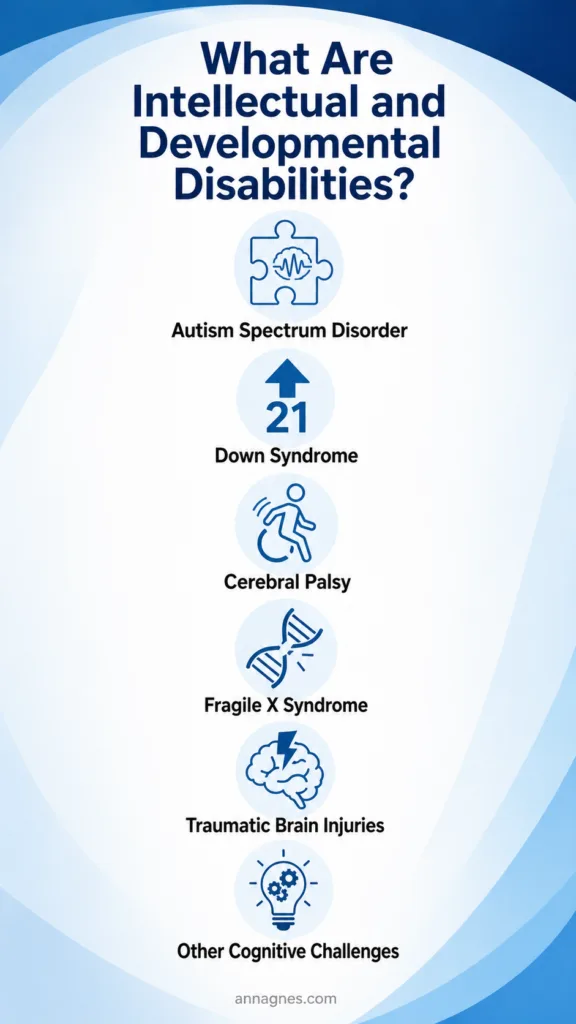
What Are Intellectual and Developmental Disabilities?
Before discussing misconceptions, it helps to understand what IDD means.
Intellectual and developmental disabilities are a group of conditions that begin during the developmental period, often before adulthood, and may affect learning, communication, behavior, mobility, or daily living skills. Some individuals are born with these conditions, while others may develop disabilities due to illness, injury, or genetic factors.
Examples may include:
- Autism spectrum disorder
- Down syndrome
- Cerebral palsy
- Fragile X syndrome
- Traumatic brain injuries with developmental impact
- Other cognitive or adaptive functioning challenges
Every person’s needs and abilities are different. Some individuals live independently with minimal support, while others need daily assistance.
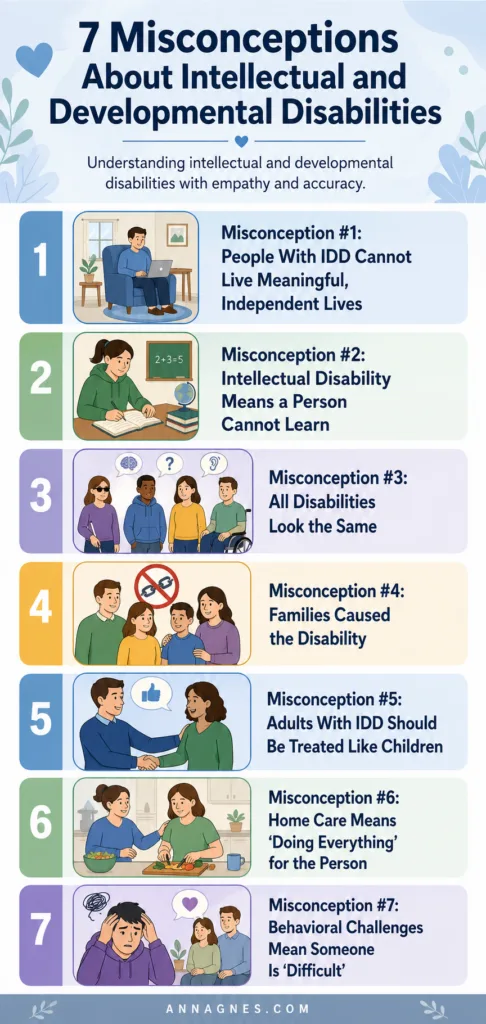
7 Misconceptions About Intellectual and Developmental Disabilities
Misconceptions about intellectual and developmental disabilities continue to shape how individuals are understood and supported, often leading to stigma, confusion, and missed opportunities for inclusion, independence, and meaningful community participation.
Misconception #1: People With IDD Cannot Live Meaningful, Independent Lives
This is one of the most harmful myths families encounter. Many people assume that a diagnosis automatically limits a person’s future.
The reality is that independence looks different for everyone. For some, independence may mean living alone. For others, it may mean choosing their schedule, helping with household tasks, maintaining friendships, holding a job, or participating actively in community life.
With the right tools and support, many individuals with IDD can:
- Learn life skills
- Work in supportive environments
- Build strong relationships
- Use public transportation
- Volunteer or attend school
- Make personal decisions
Support should be focused on increasing ability—not assuming inability.
Misconception #2: Intellectual Disability Means a Person Cannot Learn
A diagnosis does not mean learning stops, yet misconceptions about intellectual and developmental disabilities often lead people to believe otherwise. These misconceptions about intellectual and developmental disabilities can cause families and educators to underestimate a person’s ability to grow, adapt, and acquire new skills over time. In reality, it usually means a person may learn differently, need more repetition, or benefit from alternative teaching methods.
Many individuals with IDD continue learning throughout life when instruction is personalized and encouraging.
Helpful approaches may include:
- Visual schedules
- Step-by-step instruction
- Hands-on learning
- Positive reinforcement
- Routine and consistency
- Patience and repetition
Families often underestimate how much progress is possible when expectations are realistic but hopeful.
Misconception #3: All Disabilities Look the Same
No two people with IDD are exactly alike. Even individuals with the same diagnosis can have very different strengths, personalities, communication styles, and support needs.
For example:
- One person may be highly verbal, another may use assistive technology
- One may need mobility support, another may not
- One may excel socially, another may prefer quiet environments
- One may need occasional reminders, another may need full-time care
This is why individualized care plans are so important. Labels never tell the whole story.
Misconception #4: Families Caused the Disability
Some families still encounter blame, judgment, or insensitive comments, which can be emotionally painful and deeply unfair. One of the more damaging misconceptions about intellectual and developmental disabilities is the belief that parents or caregivers somehow caused the condition through actions during pregnancy, upbringing, or lifestyle choices.
Most intellectual and developmental disabilities are caused by factors such as:
- Genetics
- Birth complications
- Neurological differences
- Illness or injury
- Unknown medical causes
Families do not “cause†IDD by parenting style, discipline choices, or lack of love. In fact, many families provide extraordinary levels of dedication and advocacy every day.
Misconception #5: Adults With IDD Should Be Treated Like Children
Age matters. Adulthood should be respected, even when support needs exist.
Unfortunately, adults with developmental disabilities are often spoken to in childish tones, excluded from decisions, or denied adult experiences. This can damage confidence and dignity.
Adults with IDD deserve:
- Respectful communication
- Privacy
- Choice in daily routines
- Opportunities for work or volunteering
- Social relationships
- Age-appropriate activities
- Participation in healthcare decisions when possible
Support should never erase adulthood.
Misconception #6: Home Care Means “Doing Everything†for the Person
Many families, influenced by common misconceptions about intellectual and developmental disabilities, initially assume that home care services take over all daily tasks and replace a person’s own abilities. In reality, quality support is designed to do the opposite—strengthen independence rather than diminish it.
The best caregivers focus on encouraging participation, building confidence, and preserving existing skills whenever it is safe and possible to do so.
That may include helping someone:
- Practice dressing independently
- Prepare simple meals
- Follow routines
- Build communication skills
- Attend appointments
- Participate in community outings
- Increase confidence in daily tasks
Good care balances assistance with empowerment.
Misconception #7: Behavioral Challenges Mean Someone Is “Difficultâ€
Behavior is often communication. When someone has limited communication skills, sensory sensitivities, trauma history, anxiety, pain, or frustration, it may come out through behavior.
Instead of labeling the person, it helps to ask:
- Are they in pain?
- Is the environment overstimulating?
- Do they understand expectations?
- Are they anxious or overwhelmed?
- Has their routine changed suddenly?
- Are they trying to express a need?
Compassionate support focuses on causes, not punishment alone.
Why These Misconceptions Hurt Families
Misunderstandings affect more than public opinion. They can directly impact family well-being.
Common consequences include:
- Delayed diagnosis or treatment
- Lower expectations for the individual
- Social isolation
- Caregiver burnout
- Difficulty accessing services
- Shame or stigma
- Missed opportunities for growth
Families often carry enough responsibilities already. Accurate information can reduce emotional burden and help them move forward confidently.
What Healthcare Agencies Wish More Families Knew
Experienced home care providers often see the same truths repeatedly.
Support Can Improve Quality of Life
Care is not just about supervision. It can help build routines, safety, confidence, and connection.
Asking for Help Is Strength
Many caregivers wait too long because they feel guilty. Support protects both the individual and the family.
Progress Is Not Always Linear
Growth may come in small steps. Consistency matters more than perfection.
Families Need Support Too
Caregivers deserve rest, education, emotional support, and practical resources.
Person-Centered Care Works Best
The most effective plans are based on the individual’s preferences, strengths, and goals.
Obtain HCS
For many Texas families, Home and Community-Based Services (HCS) can be a valuable pathway to long-term support for individuals with intellectual or developmental disabilities.
HCS is a Medicaid waiver program designed to help eligible individuals receive services while living in the community rather than in institutional settings.
Depending on eligibility and available resources, support may include:
- Personal assistance
- Respite care
- Day habilitation
- Nursing support
- Adaptive aids
- Behavioral support
- Residential assistance
- Community participation services
To obtain HCS, families commonly begin by:
- Contacting their local intellectual and developmental disability authority
- Requesting screening or intake information
- Joining any required interest or waiting list
- Gathering medical and diagnostic records
- Completing Medicaid eligibility steps
- Reviewing service planning options once approved
Because wait times can exist, applying early is often wise.
How Families Can Help Break the Stigma
Changing misconceptions often starts at home and in the community.
Practical ways families can help include:
- Using respectful language
- Expecting growth and participation
- Encouraging self-advocacy
- Correcting myths when heard
- Celebrating strengths, not only challenges
- Including loved ones in decisions
- Seeking supportive professionals and agencies
Every positive interaction helps reshape outdated beliefs.
What Truly Matters Most

A diagnosis does not define a person’s worth or potential. Intellectual and developmental disabilities may shape how someone learns or navigates the world, but they do not erase individuality, dignity, humor, intelligence, kindness, or ambition.
When families replace fear with understanding, they often discover that progress is possible, joy is present, and meaningful lives can flourish with the right support system.
Building a More Informed and Compassionate Future
Misconceptions about intellectual and developmental disabilities can create barriers that never needed to exist. The more families, caregivers, and communities understand the realities of IDD, the easier it becomes to provide respect, opportunities, and person-centered care. Every individual deserves to be seen for who they are—not reduced to a diagnosis or limited by someone else’s assumptions.
If your family is navigating care needs and looking for compassionate guidance, ANN&AGNES Healthcare Solutions LLC is committed to helping individuals with IDD and related conditions thrive through personalized home and community-based support. With the right partnership, families can feel more confident, supported, and hopeful about the future.