Individuals with Intellectual and Developmental Disabilities (IDD) often experience unique challenges that affect how they communicate, express needs, understand language, and interact with others in daily life, and these challenges can significantly influence their ability to build relationships, participate in community activities, and achieve independence in both personal and social environments. Because communication is such a foundational part of human connection, delays or difficulties in speech and language development can create barriers that extend far beyond words, impacting confidence, learning ability, emotional expression, and even access to essential services.
This is where the benefits of speech therapy become especially important, as speech therapy provides structured, personalized, and goal-oriented interventions designed to improve communication skills in ways that are meaningful and functional for each individual’s daily life. For individuals with IDD, speech therapy is not just about improving pronunciation or vocabulary—it is about unlocking the ability to express thoughts, make choices, advocate for oneself, and engage more fully with the world around them in a way that promotes dignity and independence.
The Role of Speech Therapy in IDD Support
Speech therapy plays a critical role in supporting individuals with IDD by focusing on communication development, language comprehension, and functional expression skills that directly impact everyday living, and it is tailored to meet each person where they are in their developmental journey while helping them progress at a comfortable and achievable pace.
- Speech therapy helps individuals develop clearer verbal and non-verbal communication skills
- It supports understanding and processing of language in daily interactions
- Therapists work on social communication, such as turn-taking and conversation skills
- It may include alternative communication methods like sign language or communication devices
- Therapy sessions are individualized based on cognitive and developmental ability levels
The benefits of speech therapy in this context extend beyond clinical improvement and directly influence quality of life by helping individuals feel more understood, more confident, and more capable of participating in everyday routines and decisions.
Why Communication Development Matters for Individuals With IDD
Communication is one of the most essential life skills, and when individuals with IDD struggle in this area, it can affect nearly every aspect of their independence, including education, employment opportunities, social relationships, and access to healthcare or support services, which makes early and consistent intervention through speech therapy highly valuable.
- Improves ability to express needs, preferences, and emotions clearly
- Reduces frustration and behavioral challenges caused by communication barriers
- Enhances participation in school, work, and community environments
- Builds stronger relationships with caregivers, family members, and peers
- Supports safety by helping individuals understand instructions and warnings
When we examine the benefits of speech therapy, it becomes clear that communication is not just a skill—it is a gateway to independence, inclusion, and personal empowerment, especially for individuals navigating the challenges associated with IDD.
High-Impact Benefits of Speech Therapy for Individuals With IDD
The benefits of speech therapy for individuals with IDD are broad, interconnected, and deeply impactful, affecting nearly every aspect of personal development and daily functioning, particularly when therapy is consistent, individualized, and integrated into a person-centered care plan.
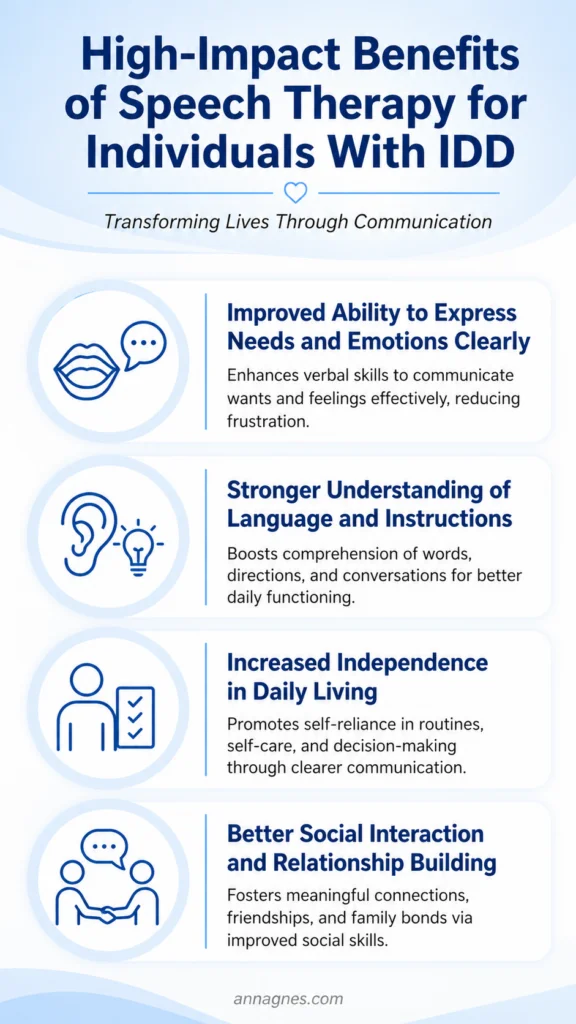
1. Improved Ability to Express Needs and Emotions Clearly
One of the most immediate and life-changing outcomes of speech therapy is the ability to communicate basic needs, preferences, and emotions in a way that reduces confusion and frustration, allowing individuals to feel more understood and supported.
- Reduces behavioral challenges caused by communication breakdowns
- Helps individuals express pain, discomfort, or emotional distress
- Improves caregiver understanding and response accuracy
- Encourages more independence in decision-making
2. Stronger Understanding of Language and Instructions
Many individuals with IDD struggle with receptive language, which affects their ability to follow directions or understand conversations, and speech therapy helps strengthen these skills in structured and practical ways.
- Improves ability to follow daily routines and instructions
- Enhances learning in school or training environments
- Supports safety by understanding warnings and guidance
- Builds comprehension of social cues and expectations
3. Increased Independence in Daily Living
As communication improves, individuals become more capable of participating in everyday tasks without constant assistance, which significantly enhances independence and self-confidence.
- Supports self-advocacy in personal care and choices
- Encourages participation in community activities
- Improves ability to communicate with service providers
- Builds confidence in navigating new environments
4. Better Social Interaction and Relationship Building
Speech therapy helps individuals develop the skills needed to interact socially, which is essential for forming friendships, participating in group settings, and feeling included in community life.
- Improves conversational skills and turn-taking
- Encourages appropriate social responses
- Reduces social isolation and withdrawal
- Builds meaningful peer and family relationships
How Speech Therapy Aligns With HCS Eligibility and Support Services
One of the most important pathways for accessing the benefits of speech therapy for individuals with IDD in Texas is through the Home and Community-based Services (HCS) Medicaid waiver program, which is designed to support individuals who require long-term assistance to live safely and independently in their communities rather than in institutional settings.
To understand how this connection works, it is helpful to see how eligibility and services align:
- Individuals must have an intellectual disability or qualifying related condition
- They must demonstrate significant limitations in adaptive daily living skills
- They must qualify for Medicaid support services
- They must not already be enrolled in another waiver program
- Once approved, therapy services like speech therapy may be included in the care plan
Within the HCS framework, speech therapy is often part of a broader, person-centered service plan that is designed to meet the individual’s developmental needs, meaning the benefits of speech therapy are not delivered in isolation but are integrated into a coordinated system of care that includes behavioral support, daily living assistance, and community-based services.
Person-Centered Care and Individualized Therapy Approaches
Speech therapy for individuals with IDD is most effective when it is tailored to the individual’s strengths, challenges, and personal goals, which is why person-centered care is a core principle in both clinical practice and Medicaid waiver services like HCS, ensuring that every intervention is meaningful and relevant to the person receiving support.
- Therapy plans are customized based on developmental level and communication ability
- Goals are set collaboratively with caregivers, families, and care coordinators
- Progress is continuously monitored and adjusted based on outcomes
- Therapy may include visual aids, technology, or alternative communication systems
- Sessions often focus on real-life communication situations, not just clinical exercises
This individualized approach ensures that the benefits of speech therapy are practical and applicable in everyday life, helping individuals with IDD not only improve communication skills but also use them effectively in real-world environments such as home, school, work, and community settings.
The Emotional and Social Impact of Speech Therapy
Beyond functional communication improvements, speech therapy also has a profound emotional and social impact on individuals with IDD, as the ability to communicate effectively often leads to increased self-esteem, reduced anxiety, and a stronger sense of belonging within social environments.
- Builds confidence in expressing thoughts without fear or frustration
- Encourages participation in group activities and social settings
- Reduces isolation by improving ability to connect with others
- Supports emotional regulation through better expression of feelings
- Strengthens identity and self-advocacy skills
These emotional and social changes are some of the most meaningful benefits of speech therapy, as they directly contribute to improved overall well-being and life satisfaction, which are essential components of long-term developmental support.
Accessing Support Through Agencies
For families and individuals seeking access to the benefits of speech therapy under programs like HCS, agencies play a vital role in bridging the gap between eligibility, care coordination, and service delivery, ensuring that individuals receive the support they need in a structured and compassionate manner.
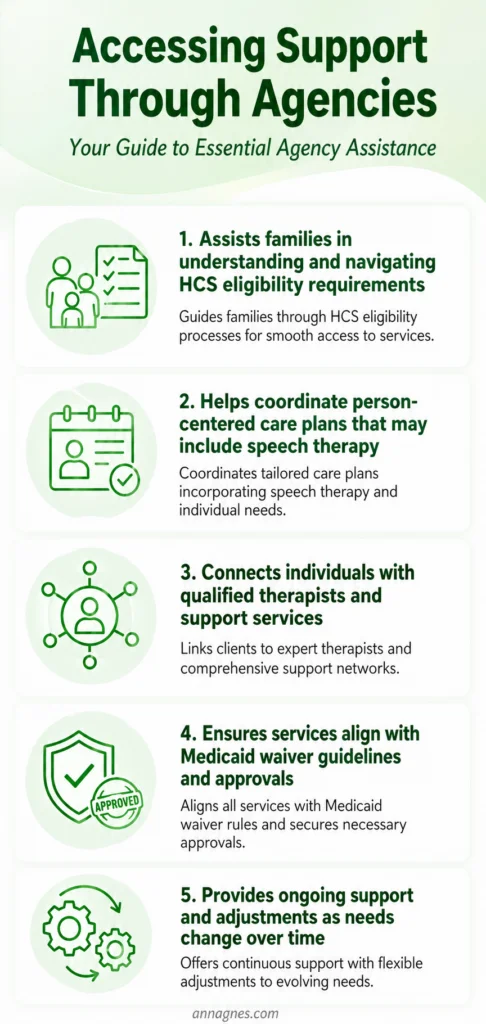
- Assists families in understanding and navigating HCS eligibility requirements
- Helps coordinate person-centered care plans that may include speech therapy
- Connects individuals with qualified therapists and support services
- Ensures services align with Medicaid waiver guidelines and approvals
- Provides ongoing support and adjustments as needs change over time
By working closely with individuals, families, and service providers, agencies like ANN&AGNES help ensure that the benefits of speech therapy are fully accessible and effectively implemented, allowing individuals with IDD to experience meaningful progress in communication, independence, and quality of life.
A Path Toward Better Communication and Support
The benefits of speech therapy for individuals with IDD are far-reaching, influencing communication, independence, emotional well-being, and social integration in ways that can transform everyday life. When combined with the support of programs like HCS, speech therapy becomes even more powerful, as it is delivered within a system that prioritizes long-term care, community living, and individualized growth, ensuring that each person receives the support they need to thrive.
For families seeking a clear path toward accessing these services, working with ANN&AGNES Healthcare Solutions can make a meaningful difference, providing guidance through HCS eligibility, coordinating personalized care plans, and ensuring that individuals receive consistent, high-quality speech therapy tailored to their unique needs. Taking the next step toward structured support can open the door to better communication, greater independence, and a more empowered future.