

Many families wait until a fall, hospitalization, or medical emergency forces them to look for help. But the reality is that homecare works best when it starts before a crisis happens, not after. Knowing how to recognize early warning signs and understanding how to get home care ahead of time can prevent emergencies, protect independence, and reduce stress for everyone involved. This guide will help you identify the subtle changes many families overlook, explain how to get home care, and show how early support can make a major difference in your loved one’s safety and quality of life.
As parents age, changes often happen slowly, making them easy to dismiss as “normal aging.†However, recognizing these early signs gives families the opportunity to act proactively instead of reactively. Understanding how to get home care before problems escalate allows families to create a safe support system instead of scrambling during a difficult situation. Agency helps families take these proactive steps by providing personalized homecare services designed to support independence while ensuring safety. If you are starting to notice small changes in your loved one, now may be the right time to learn how to get home care and explore your options.
Why Families Often Wait Too Long to Get Help
Many adult children hesitate to explore homecare because:
- They believe their parent is “doing fineâ€
- Their loved one insists they don’t need help
- They think homecare is only for serious illness
- They don’t know how to get home care
- They assume it is too expensive
- They feel guilty bringing in outside help
The truth is, homecare is not just for medical situations. It is also designed to prevent problems, not just respond to them.
Learning how to get home care early gives families time to:
- Make thoughtful decisions instead of rushed ones
- Choose the right level of care
- Build trust with caregivers gradually
- Prevent accidents before they happen
- Reduce caregiver stress for family members
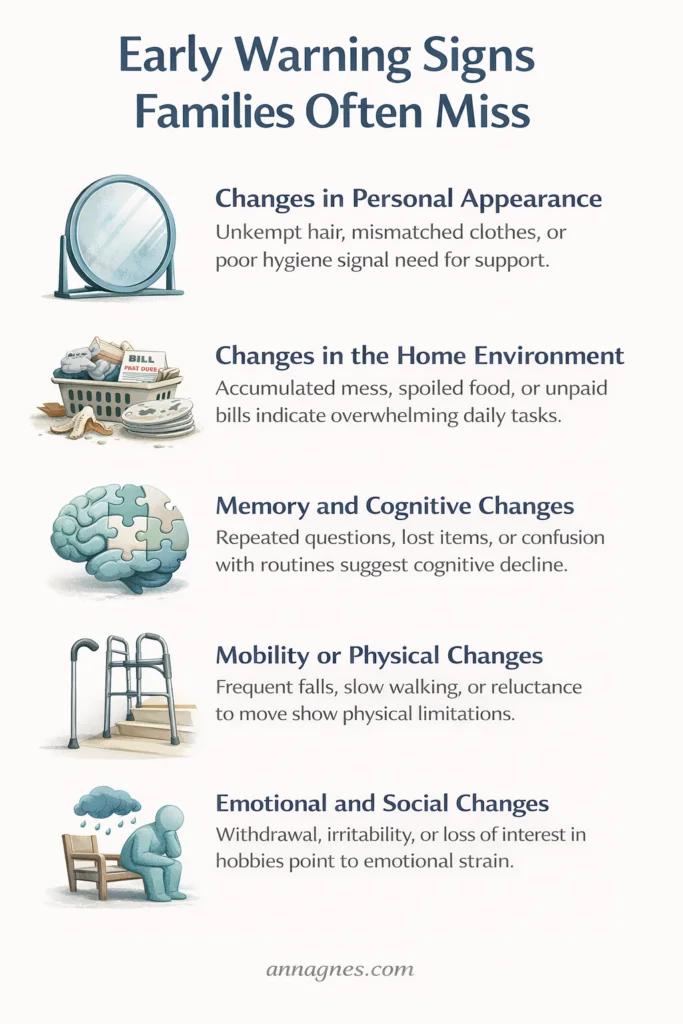
Early Warning Signs Families Often Miss

Many signs that a parent may need help are subtle. These small changes often appear months or even years before a serious incident.
Here are some early red flags:
Changes in Personal Appearance
- Wearing the same clothes repeatedly
- Decline in grooming habits
- Unwashed hair or neglected hygiene
- Weight loss from poor eating habits
These signs may indicate your loved one is struggling with daily routines.
Changes in the Home Environment
- Piles of unopened mail
- Expired food in the refrigerator
- Clutter or unusual disorganization
- Missed household maintenance
These may signal difficulty managing daily responsibilities.
Memory and Cognitive Changes
- Forgetting appointments
- Repeating stories frequently
- Confusion about dates or times
- Misplacing important items
These are often early indicators families notice before seeking information about how to get home care.
Mobility or Physical Changes
- Holding onto furniture while walking
- Difficulty standing up from chairs
- Complaints about dizziness
- Slower movement than usual
These signs increase fall risk and may indicate support is needed.
Emotional and Social Changes
- Withdrawal from social activities
- Less interest in hobbies
- Increased irritability
- Signs of loneliness in seniors
Companion care, a part of homecare, can address these concerns before they worsen.
Why Early Home Care Makes a Big Difference
Starting homecare early allows seniors to:
- Maintain independence longer
- Build trust with caregivers
- Stay safer at home
- Avoid hospitalizations
- Improve emotional well-being
Families who research how to get home care early often report less stress because they feel prepared rather than overwhelmed.
Early homecare can provide:
- Light housekeeping assistance
- Meal preparation
- Companionship
- Transportation help
- Safety supervision
These services may seem small, but they often prevent much bigger problems.
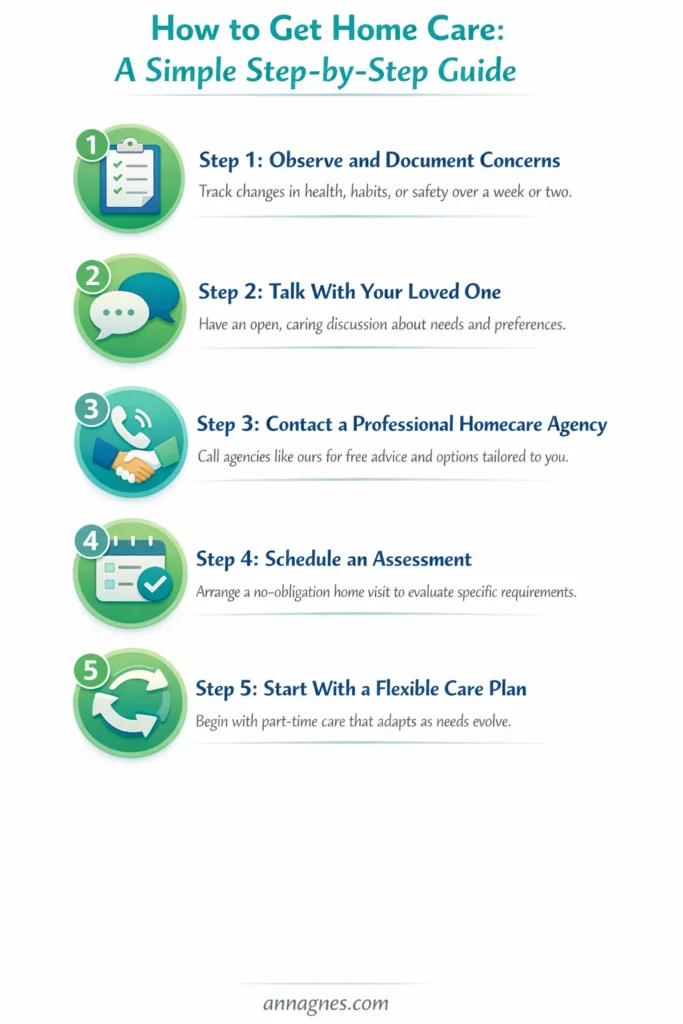
How to Get Home Care: A Simple Step-by-Step Guide
Many families feel overwhelmed because they simply don’t know how to get home care. The process is usually much simpler than expected.
Here is a basic guide:
Step 1: Observe and Document Concerns
Start by writing down:
- Changes you notice
- Safety concerns
- Daily challenges
- Behavioral changes
This helps professionals determine the right support level.
Step 2: Talk With Your Loved One
Approach the conversation with empathy:
- Express concern, not control
- Focus on safety and comfort
- Emphasize independence
- Suggest trying small amounts of help first
Families researching how to get home care often find starting small works best.
Step 3: Contact a Professional Homecare Agency
A quality agency will:
- Explain services clearly
- Conduct an assessment
- Recommend appropriate support
- Create a personalized plan
This is usually the most important step in understanding how to get home care.
Step 4: Schedule an Assessment
An assessment evaluates:
- Physical ability
- Safety risks
- Daily living needs
- Social needs
- Home environment
This ensures services match actual needs.
Step 5: Start With a Flexible Care Plan
Many families begin with:
- A few hours per week
- Companion care visits
- Safety supervision
- Transportation help
Homecare can always increase later if needed.
Common Myths About Getting Home Care
Misconceptions often prevent families from learning how to get home care early.
Myth: Homecare means loss of independence
Reality: Homecare actually helps seniors remain independent longer.
Myth: Only very sick seniors need care
Reality: Many clients only need light support or companionship.
Myth: Family should do everything alone
Reality: Professional support prevents burnout and improves care quality.
Myth: It is too complicated to arrange
Reality: Once families understand how to get home care, the process becomes straightforward.
When Is the Right Time to Start?
The best time to explore how to get home care is when:
- You notice small safety concerns
- Daily tasks become harder
- Isolation increases
- Mobility changes appear
- Memory lapses increase
- You feel worried about their safety
The worst time is after:
- A fall
- Hospitalization
- A medical emergency
- Severe burnout of family caregivers
Planning early gives families control and peace of mind.
How Homecare Supports the Whole Family

Homecare isn’t just for seniors. It supports families by:
- Reducing caregiver stress
- Providing professional guidance
- Improving communication about needs
- Offering reassurance someone is checking in
Many families researching how to get home care are surprised to learn how much it helps them emotionally as well.
Questions Families Should Ask When Learning How to Get Home Care
If you are exploring options, consider asking:
- What services are available?
- How are caregivers trained?
- Can services change if needs change?
- How often are care plans reviewed?
- How is safety monitored?
Understanding these details helps families feel confident about how to get home care.
Small Steps You Can Take Today
If you’re not ready for full services yet, you can still begin preparing:
- Start the Conversation Early: Talking before a crisis reduces resistance and fear.
- Observe Patterns: Watch for gradual changes rather than isolated incidents.
- Research Local Agencies: Knowing options reduces panic later.
- Create a Safety Checklist: Identify fall risks and hazards.
- Introduce Help Gradually: Starting with companionship can ease transitions.
These small steps make learning how to get home care much easier when the time comes.
Planning Ahead Protects Independence

One of the biggest misunderstandings about homecare is that it signals decline. In reality, early support often extends independence.
Preventative support can:
- Reduce fall risk
- Improve nutrition
- Maintain routines
- Support emotional health
- Prevent emergencies
Families who understand how to get home care early often say they wish they had started sooner.
Take the First Step Before a Crisis Happens
Waiting for a crisis limits your options. Planning ahead gives you control, confidence, and peace of mind. Recognizing the early signs and learning how to get home care allows your loved one to stay safe, comfortable, and supported in the place they love most—their home.
ANN&AGNES Homecare Agency understands how difficult it can be to decide when to bring in help. That’s why we guide families through every step of how to get home care, from the first conversation to creating a personalized care plan. Our compassionate caregivers provide supervision, companionship, and daily support designed to protect independence while reducing family stress.
If you are beginning to notice changes in your loved one, now is the best time to act. Contact ANN&AGNES Homecare Agency today to learn how to get home care that fits your family’s needs. A simple conversation today can prevent a crisis tomorrow.