

Loneliness is more than just feeling sad—it’s a serious health concern for older adults. Studies show that prolonged social isolation can increase the risk of depression, cognitive decline, and even physical health issues such as heart disease. Many seniors live independently but experience limited social interaction, leaving them feeling isolated and disconnected. Fortunately, companion care, a specialized type of homecare, can help seniors stay engaged, emotionally supported, and socially connected.
Companion care focuses on building meaningful relationships, assisting with daily activities, and providing companionship that enhances overall well-being. For families caring for aging parents, understanding how companion care works and the difference it can make is an important step toward improving their loved one’s quality of life.
Loneliness Isn’t Just Sadness: What It Means for Seniors
Loneliness in seniors isn’t just emotional—it can have profound effects on physical and mental health:
- Increased risk of depression and anxiety – Lack of social interaction can exacerbate feelings of sadness and hopelessness.
- Cognitive decline – Engaging conversations and mental stimulation help maintain memory and cognitive function.
- Physical health impact – Loneliness is linked to higher blood pressure, weakened immune function, and increased risk of heart disease.
- Higher risk of falls and accidents – Seniors who are isolated may be less motivated to stay active, leading to muscle weakness and mobility challenges.
- Shorter life expectancy – Research suggests socially isolated seniors may have a higher mortality rate compared to those with strong social connections.
Recognizing loneliness as a serious concern helps families understand why proactive measures like companion care can make a significant difference in their loved one’s health and happiness.
Common Causes of Loneliness in Seniors
Understanding the reasons behind loneliness in seniors helps families take meaningful steps to reduce isolation and improve emotional well-being.
- Loss of friends or spouse
- Physical limitations or mobility challenges
- Living alone without nearby family
- Retirement and reduced social activities
- Hearing or vision difficulties
- Feeling disconnected from community events
Tip: Identifying the cause of loneliness allows for targeted solutions, like companion care or social programs.
What Is Companion Care?

Companion care is a type of non-medical homecare designed to support seniors emotionally and socially, while also assisting with daily routines. Unlike personal care services, which focus on physical tasks like bathing or dressing, companion care emphasizes connection, engagement, and meaningful interactions.
Key features of companion care include:
- Friendly companionship – Simply spending time talking, listening, and providing emotional support.
- Social engagement – Encouraging hobbies, games, reading, music, or other enjoyable activities.
- Accompaniment – Assisting seniors with errands, appointments, or social outings to maintain independence.
- Daily check-ins – Regular visits to provide a consistent presence and monitor mood or health changes.
- Meal companionship – Eating together to promote nutrition and social interaction.
The goal is to reduce feelings of isolation, provide mental stimulation, and improve emotional well-being while supporting everyday life.
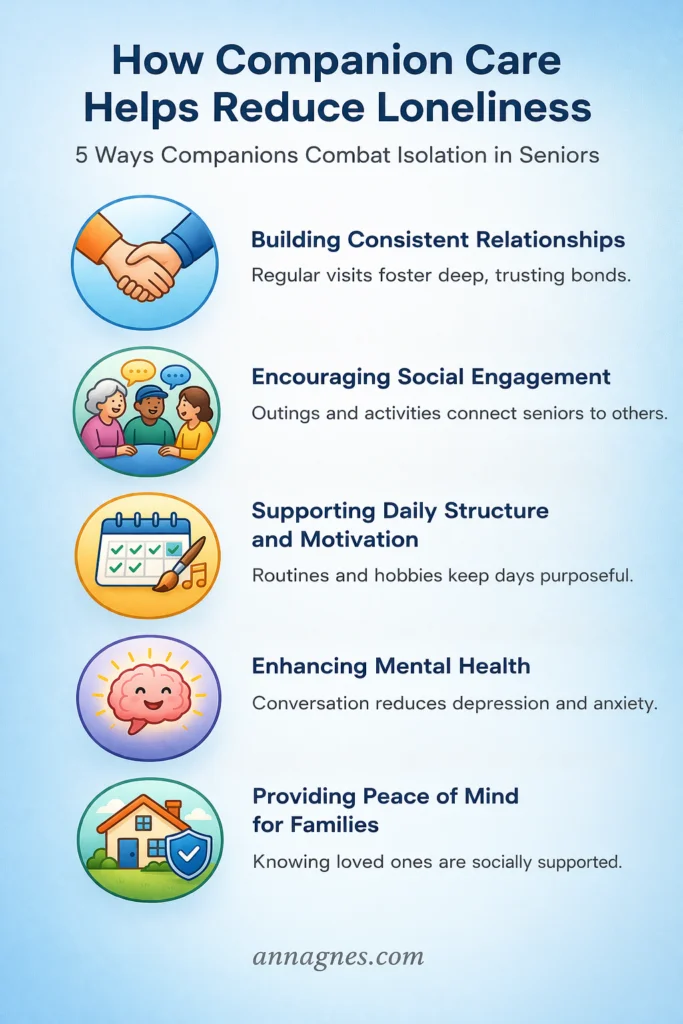
How Companion Care Helps Reduce Loneliness
Companion care can be transformative in addressing loneliness in seniors. Here’s how it promotes connection, engagement, and emotional well-being.
1. Building Consistent Relationships
- Regular visits allow caregivers to develop trust and rapport with seniors.
- Seniors feel valued and less isolated knowing someone is there to listen and engage with them.
- Over time, these relationships can foster emotional resilience and confidence.
2. Encouraging Social Engagement
- Caregivers introduce seniors to hobbies, games, or local social activities.
- Even small interactions like reading together or discussing current events stimulate conversation and mental activity.
- Seniors are more likely to maintain friendships and feel included in their communities.
3. Supporting Daily Structure and Motivation
- Isolation often leads to a lack of daily routine, poor nutrition, or inactivity.
- Companion caregivers help seniors stay on schedule, encouraging regular meals, exercise, and participation in enjoyable activities.
- A structured day reduces feelings of aimlessness, which can worsen loneliness.
4. Enhancing Mental Health
- Consistent companionship can reduce anxiety and depressive symptoms.
- Engaging interactions stimulate the brain, helping maintain cognitive function and memory.
- Seniors who feel supported are more likely to stay positive and proactive about their health.
5. Providing Peace of Mind for Families
- Families know their loved ones are not alone, reducing stress and worry.
- Caregivers can observe changes in mood or health and communicate concerns promptly.
- Companion care allows families to balance work, life, and caregiving responsibilities without leaving seniors socially isolated.
Signs Your Loved One Could Benefit from Companion Care
If you’re considering companion care, watch for these warning signs of loneliness in seniors or social isolation:
- Limited or no daily interaction with family, friends, or neighbors
- Expressing feelings of boredom, sadness, or disconnection
- Declining interest in hobbies or previously enjoyed activities
- Unexplained changes in mood or behavior
- Skipping meals or neglecting personal care due to lack of motivation
- Increased reliance on television or passive entertainment for company
Early intervention with companion care can prevent emotional and physical decline and help seniors maintain a fulfilling lifestyle at home.
Daily Activities Companion Care Can Provide
Companion care is flexible and can help address loneliness in seniors, tailored to their preferences and needs. Common activities include:
- Conversation and story sharing – Listening, discussing family memories, or current events
- Reading or writing together – Books, newspapers, letters, or creative writing exercises
- Games and puzzles – Board games, cards, or brain-teasing activities to stimulate mental agility
- Music and arts – Listening to music, singing, painting, or crafts
- Physical activity – Gentle exercises, stretching, or walks outside
- Meal preparation and dining together – Encourages proper nutrition and social interaction
- Outings and errands – Doctor appointments, grocery shopping, or social visits
These activities not only combat loneliness but also help seniors stay active, engaged, and independent.
The Role of Professional Homecare Agencies
Professional Homecare agencies provide more than just a visiting companion—they offer a comprehensive approach to supporting seniors:
- Trained caregivers with experience in elder care and emotional support
- Personalized care plans based on individual needs, preferences, and schedules
- Supervision and safety to prevent accidents or injuries while engaging in daily activities
- Regular reassessment to ensure the care plan evolves with changing needs
By partnering with a professional agency, families can ensure their loved ones receive consistent quality care, companionship, and social engagement.
How to Choose the Right Companion Care Provider
Finding the right caregiver ensures positive experiences:
- Look for experience with seniors and strong interpersonal skills
- Verify background checks and references
- Ensure caregivers are trained in communication and safety
- Choose agencies that allow flexible scheduling and personalized care plans
- Meet potential caregivers with your parent before starting
Insight: A good match builds trust and maximizes the benefits of companion care.
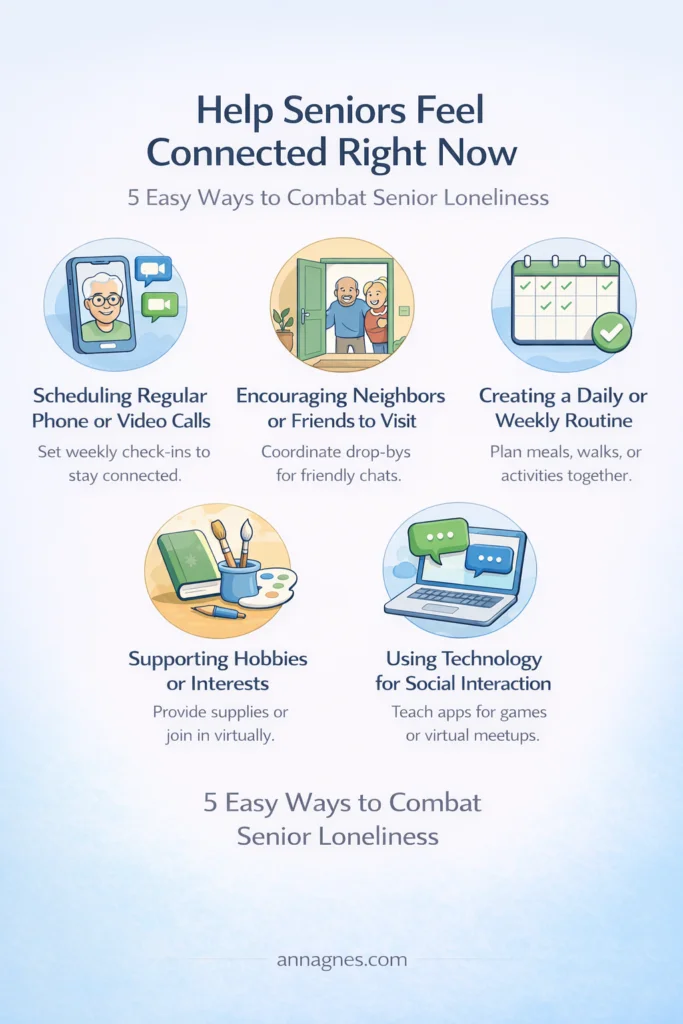
Simple Steps Families Can Take Right Now
Even before arranging formal companion care, families can take practical steps to address loneliness in seniors and support their emotional well-being:
- Scheduling Regular Phone or Video Calls: Set up consistent check-ins to maintain connection and emotional support.
- Encouraging Neighbors or Friends to Visit: Social visits provide companionship and reduce feelings of isolation.
- Creating a Daily or Weekly Routine: Establishing predictable activities gives structure and purpose to each day.
- Supporting Hobbies or Interests: Encourage activities your loved one enjoys to keep them mentally stimulated and engaged.
- Using Technology for Social Interaction: Tablets, apps, or online communities can help seniors stay connected with family and friends.
While these strategies help, professional companion care amplifies their impact by providing daily support, accountability, and meaningful engagement tailored to your loved one’s needs.
Creating a Happier, More Connected Home
Loneliness is a challenge many seniors face, but it doesn’t have to define their later years. With companion care, seniors receive the social interaction, emotional support, and daily assistance that enhances quality of life and promotes independence.
At ANN&AGNES Homecare Agency, we understand the importance of connection and engagement for seniors. Our trained caregivers provide personalized companion care designed to reduce loneliness, encourage participation in daily activities, and offer emotional support to your loved one.
By choosing our services, you’re not just hiring help—you’re ensuring your loved one has someone they can trust, share stories with, and enjoy life alongside every day.
Take the first step toward a happier, more connected life for your loved one today. Contact ANN&AGNES Healthcare Solution Agency at (832) 855-8443 or visit our website to schedule a consultation and learn how companion care can make a meaningful difference in your family’s life.