

Families often remember the moment they realized their loved one needed more help than they could provide alone. That decision to bring in a caregiver carries weight — not just practically, but emotionally. The right person doesn’t just assist with tasks; they become a trusted presence in the home.
This article breaks down the qualities of a caregiver that separate good support from truly exceptional home care. Understanding these traits helps families make confident choices and set clear expectations. By focusing on what matters most, readers can identify caregivers who deliver reliable, compassionate service day after day.
Why Caregiver Qualities Matter More Than Experience Alone
Hiring a caregiver isn’t like buying a service off a menu. Technical skills matter, but the real difference comes from character and approach. A caregiver with years of experience but poor interpersonal skills can create more stress than relief.
What most people don’t realize is that the qualities of a caregiver directly impact a client’s emotional well-being and long-term satisfaction. Research shows that strong caregiver-client relationships reduce anxiety and improve health outcomes. Families who prioritize these traits see smoother transitions and fewer disruptions.
In practice, agencies screen for these qualities through interviews, references, and trial periods. But families still need to observe them firsthand. That’s why knowing what to look for changes everything.
The 8 Qualities of a Caregiver

Exceptional home care hinges on specific, observable traits that turn good intentions into reliable daily support.
Quality 1: Genuine Empathy and Compassion
Empathy isn’t just feeling sorry for someone — it’s understanding their world without judgment. The best caregivers sense when a client feels frustrated or vulnerable and respond with patience rather than efficiency alone.
Consider an elderly woman adjusting to help with bathing. A compassionate caregiver explains each step calmly, maintains eye contact, and respects her dignity. That small act builds trust faster than any checklist.
This quality shines in everyday moments: listening to the same family story for the tenth time, or offering a reassuring touch during a tough afternoon. Families notice when empathy feels genuine versus scripted. It’s the foundation of every strong caregiver-client bond.
Quality 2: Reliability and Punctuality
Dependability forms the backbone of home care. Clients and families count on caregivers to show up on time, every time — especially when schedules revolve around visits.
Life happens, but exceptional caregivers communicate issues early and have backup plans. They don’t leave families guessing about arrival times or sudden cancellations. In my experience, this consistency reduces family stress more than any other single factor.
Look for caregivers who treat commitments like promises. Agencies with strong scheduling systems amplify this quality, ensuring replacements arrive seamlessly. Reliability turns home care from a worry into a rhythm families can trust.
Quality 3: Patience Under Pressure
Daily routines rarely go perfectly. Medications run low, moods shift, or small crises arise. Caregivers who stay calm and patient keep the day on track without adding tension.
Picture helping someone with mobility issues who resists assistance. An impatient caregiver might rush or snap; a patient one slows down, offers choices, and waits for cooperation. That difference prevents conflicts and preserves dignity.
The qualities of a caregiver like patience reveal themselves over time, not in interviews. Families benefit most by observing interactions during trial visits. Patience isn’t just nice — it’s essential for long-term harmony.
Quality 4: Strong Communication Skills
Clear communication bridges gaps between caregivers, clients, and families. Great caregivers explain care details simply, ask clarifying questions, and provide regular updates without being asked.
They adapt their style to the listener — detailed notes for busy adult children, gentle reminders for clients with memory concerns. This prevents misunderstandings about medications, preferences, or schedule changes.
Families appreciate caregivers who proactively share observations: “Your mom seemed more tired today” or “He ate well but skipped dessert.” That transparency builds partnership. Poor communication, by contrast, breeds doubt and frustration.
Quality 5: Attention to Detail and Observation
Exceptional caregivers notice subtle changes others miss. A slight wince during movement, skipped meals, or unusual quietness — these cues signal health shifts before they become problems.
This quality goes beyond task completion. It means remembering a client’s favorite tea, preferred blanket, or how they like their pillows arranged. Those details create comfort and show genuine care.
In practice, sharp observation leads to better outcomes. Caregivers who spot early dehydration or mood dips can alert families or doctors promptly. It’s a quiet superpower that elevates routine support to proactive partnership.
Quality 6: Respect for Privacy and Boundaries
Home care happens in intimate spaces. Caregivers must honor personal boundaries while completing necessary tasks. This means knocking before entering rooms, asking permission before moving belongings, and maintaining confidentiality.
Respect extends to lifestyle choices too. Whether it’s religious practices, dietary preferences, or family dynamics, caregivers defer to the client’s way of life. They don’t impose their own opinions or habits.
Families feel this quality immediately. A caregiver who treats the home like their own territory creates unease; one who acts as a respectful guest builds instant comfort. Boundary awareness is non-negotiable.
Quality 7: Physical Stamina and Safety Awareness
Caregiving demands physical effort — lifting, transferring, cleaning, and staying active for hours. Strong caregivers handle these demands without fatigue or risk to themselves or clients.
Safety awareness pairs with stamina. They know proper body mechanics for transfers, recognize fall risks, and maintain clean environments. Training matters here, but natural caution amplifies it.
What families often overlook: tired caregivers make mistakes. Prioritizing stamina ensures consistent quality through long shifts. Agencies that match physical capabilities to client needs excel in this area.
Quality 8: Adaptability and Problem-Solving
No two days look exactly alike. Great caregivers pivot smoothly when plans change — a sudden rainstorm cancels a walk, or a client wants an unscheduled nap.
Adaptability shows in creative solutions too. Maybe a picky eater needs meal tweaks, or anxiety spikes during family visits. Flexible caregivers adjust without frustration, turning challenges into manageable moments.
This quality future-proofs care arrangements. As health or preferences evolve, adaptable caregivers keep support effective. Families who value flexibility avoid frequent staff changes and disruptions.
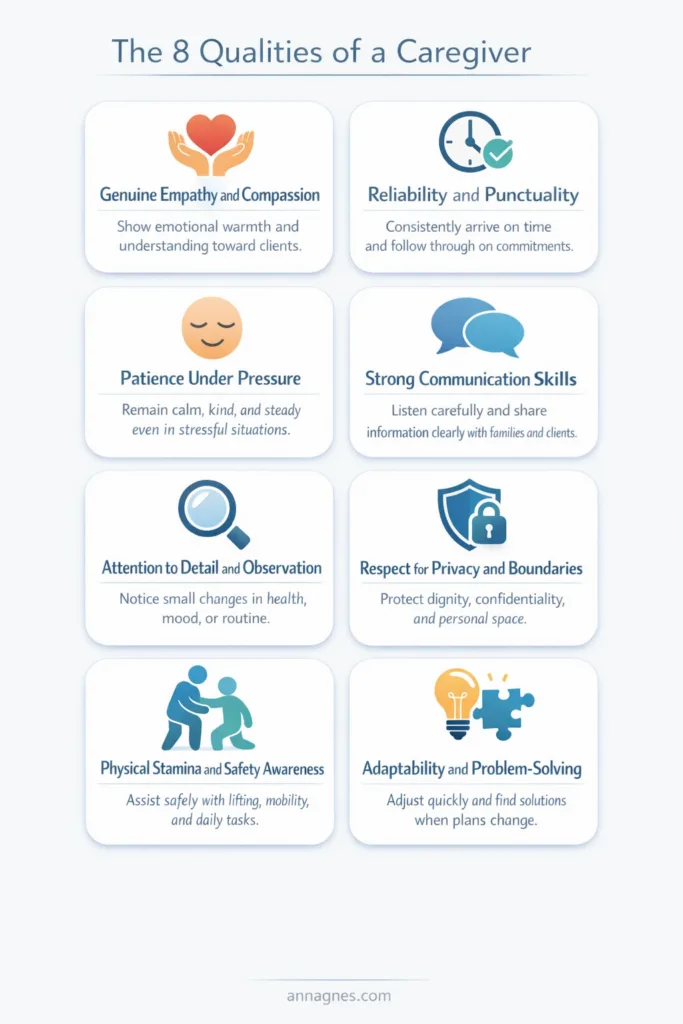
How to Spot These Qualities During Interviews and Trials
Knowing the qualities of a caregiver is step one; identifying them in real candidates is step two. Start with targeted questions during agency consultations or interviews.
Questions That Reveal True Character
- “Tell me about a time you cared for someone who resisted help. How did you handle it?”
- “What do you do when a client’s family disagrees with your approach?”
- “Describe a day when everything went wrong. How did you manage?”
- “How do you handle repetitive tasks or stories without losing patience?”
Observe trial visits closely. Does the caregiver engage the client naturally? Do they anticipate needs or wait for instructions? Small behaviors predict long-term fit.
References matter too. Ask previous clients or families: “What stood out about their care?” Patterns emerge quickly.
Common Mistakes When Evaluating Caregiver Qualities
Families sometimes prioritize the wrong signals. A warm smile impresses initially, but consistency matters more over months. Here’s where things often go wrong:
- Over-relying on agency promises. Even reputable providers occasionally mismatch staff. Trial periods catch this.
- Ignoring personality fit. Clinical skills don’t guarantee rapport. Watch client reactions.
- Skipping reference checks. Past performance predicts future results better than interviews.
- Focusing only on tasks. Qualities of a caregiver drive satisfaction more than checklists.
In my experience, families who treat selection like hiring a live-in professional — with observation and questions — build stronger partnerships from day one.
Why Agencies Matter in Delivering These Qualities

Individual caregivers vary, but quality agencies amplify the qualities of a caregiver through training, supervision, and matching processes. They invest in ongoing education about empathy, safety, and communication.
Strong agencies also provide structure: regular evaluations, feedback loops, and replacement protocols. This ensures consistent quality even if one caregiver doesn’t work out.
Families benefit from this system. It reduces risk and administrative burden while focusing on what matters — finding the right daily support.
Building Long-Term Success with the Right Caregiver
Exceptional caregivers transform home care from necessity to comfort. They handle routines so families can focus on relationships. Over time, the best ones become extended family members.
Start by demanding these eight qualities. Use them as your filter for agencies and candidates. The payoff comes in peace of mind, better health outcomes, and preserved dignity.
When vetting options, consider providers who prioritize these traits. Ann & Agnes Homecare Agency exemplifies this approach, matching caregivers whose qualities of a caregiver align with each family’s unique needs. Contact them to discuss how these standards can support your loved one at home.