
When you or a loved one begins exploring in-home support, knowing the questions to ask home care providers becomes one of the most important steps in securing safe, reliable, and compassionate care. With so many agencies offering similar services, it can be difficult to determine which provider truly prioritizes quality and dignity.
Asking thoughtful, well-informed questions upfront helps families move beyond surface-level promises and understand how care is actually delivered day to day. The right questions can reveal how an agency trains its caregivers, handles emergencies, personalizes care plans, and supports both clients and families.
This article outlines the most important questions to ask home care providers, helping you confidently evaluate your options and choose a service that delivers professional, person-centered care you can trust.
Understanding the Scope of Home Care Services
Before you can choose the right provider, it’s essential to understand what home care includes. Home care services vary widely, and agencies may offer different levels of support depending on expertise, licensing, and focus areas.
Typical services can include:
- Personal care (bathing, dressing, grooming)
- Medication management and reminders
- Meal preparation and nutrition support
- Light housekeeping and laundry assistance
- Companionship and social engagement
- Specialized care for intellectual and developmental disabilities (IDD), brain injuries, or neurological conditions
Question to ask:
“What specific services do you provide, and how are they tailored to meet individual needs?”
Knowing exactly what is included—and what may require additional resources—helps you compare providers more effectively.
Who Can Benefit from Homecare
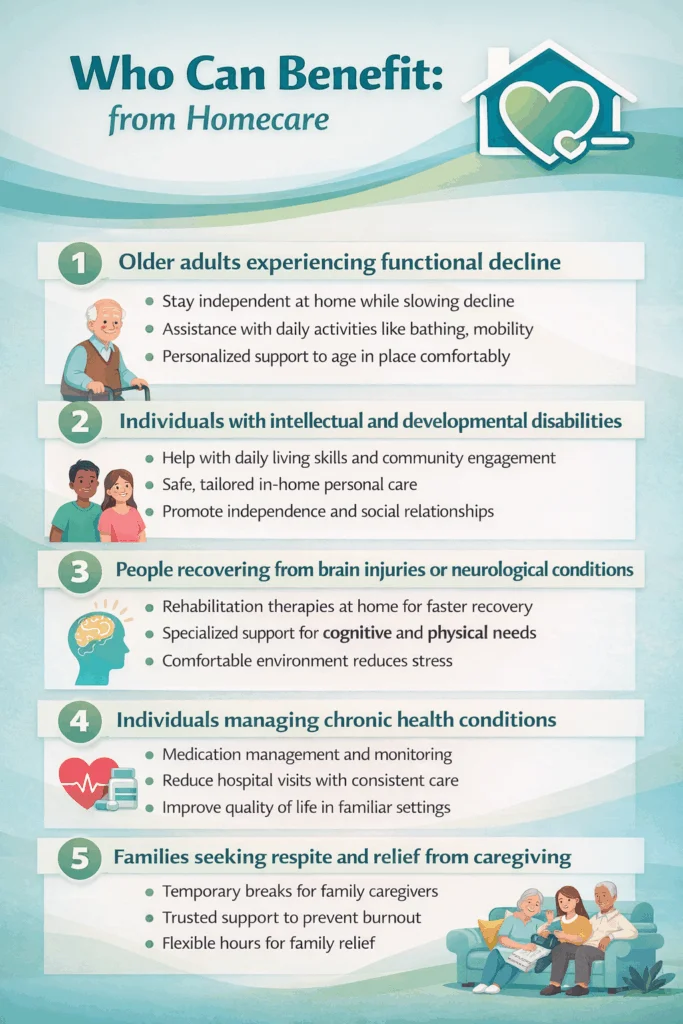
Homecare supports a wide range of individuals across different life stages and care needs. Its flexibility allows it to address short-term needs as well as ongoing support requirements.
Homecare may benefit:
- Older adults experiencing functional decline
- Individuals with intellectual and developmental disabilities (IDD)
- People recovering from brain injuries or neurological conditions
- Individuals managing chronic health conditions
- Families seeking respite and relief from caregiving
- Adults with mobility or cognitive challenges who wish to remain in their home
- Individuals in need of rehabilitation or therapy support
- People who require companionship to reduce isolation
Because services are personalized, homecare can provide the right level of support at the right time. This adaptability ensures individuals can receive short-term help during recovery or long-term assistance for ongoing needs.
When to Inquire Homecare Service
Knowing the right time to explore homecare can help families plan ahead and avoid crises. Inquiring early ensures the individual receives support when it’s most effective, while also giving families time to research and choose the right provider.
You may want to inquire about homecare if any of the following situations apply:
- The individual is showing signs of functional decline, such as difficulty with bathing, dressing, or mobility
- Caregiver fatigue or burnout is starting to affect family members’ ability to provide consistent support
- The individual has recently been discharged from a hospital, rehab, or long-term care facility and needs transitional support
- There are changes in health status, medication routines, or therapy needs that require professional assistance
- The individual is at risk of social isolation and could benefit from companionship and engagement
- Plans are being made for long-term community-based living instead of institutional care
- Support is needed to safely manage chronic health conditions or recovery from injury
By asking these questions and planning ahead, families can ensure a smooth introduction to homecare services. Early inquiry allows for careful selection of the right provider, minimizes stress, and maximizes the individual’s safety, independence, and quality of life.
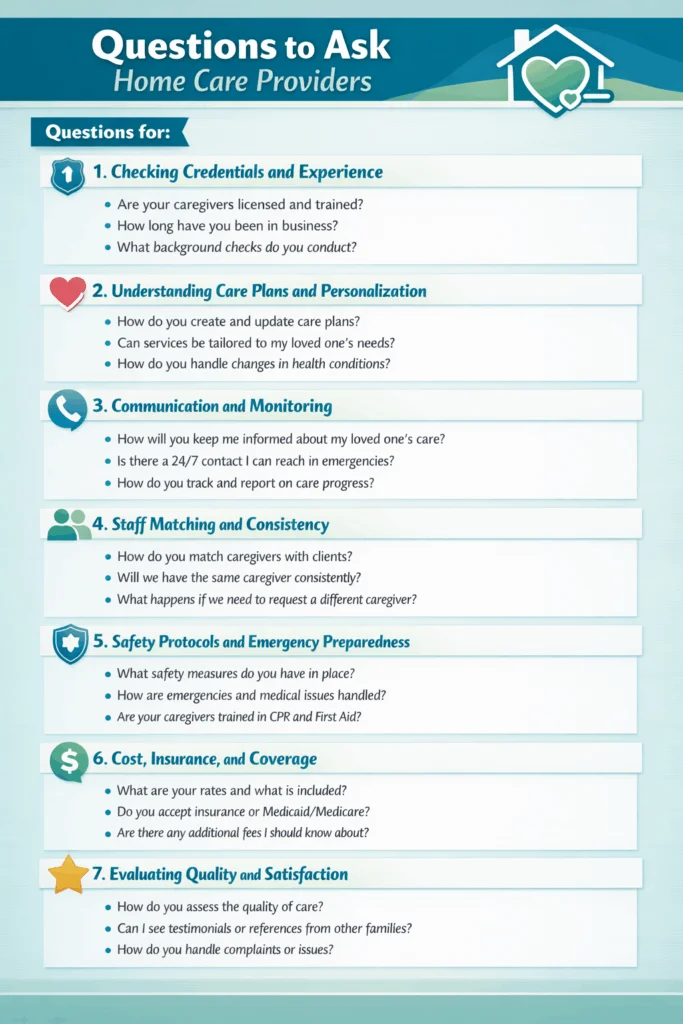
Questions to Ask Home Care Providers

Choosing the right caregiver begins with asking the right questions. This list of questions to ask home care providers will help you evaluate quality, reliability, and trust.
Checking Credentials and Experience
Not all home care providers are created equal. Licensing, certifications, and staff training are crucial indicators of quality care.
Questions to consider:
- Are your caregivers licensed, certified, or trained in specific therapeutic or medical care?
- How does your agency screen and hire staff?
- What ongoing training programs are in place to ensure staff stay up to date?
- How much experience does your team have working with conditions similar to my loved one’s?
For individuals with IDD or related conditions, experience matters even more. Agencies like ANN&AGNES Homecare Agency prioritize staff with specialized training in supporting individuals with unique cognitive, developmental, and physical needs.
Understanding Care Plans and Personalization
High-quality home care isn’t “one size fits all.†Care plans should be tailored to the individual’s preferences, routines, and goals.
Key questions include:
- How do you create individualized care plans?
- How often are care plans reviewed and updated?
- Do you involve family members and the individual in the planning process?
- How do you ensure continuity of care if a caregiver is unavailable?
Personalized care supports independence, emotional well-being, and safety. Agencies that integrate flexibility and collaboration into care planning are more likely to meet long-term needs effectively.
Communication and Monitoring
Clear, ongoing communication between caregivers, families, and the agency is critical. Families should feel informed about daily care, health changes, and any concerns.
Questions to ask:
- How will I receive updates about daily care and progress?
- How do you handle emergencies or sudden changes in health status?
- Is there a point of contact available 24/7 for questions or concerns?
- Do you provide documentation or care logs for transparency?
Effective monitoring ensures accountability and allows families to respond proactively to any changes in their loved one’s condition.
Staff Matching and Consistency
The relationship between caregiver and client can greatly affect outcomes. Consistency, trust, and compatibility are key factors.
Questions to ask:
- How do you match caregivers to clients?
- Can we request a change if the caregiver-client match isn’t ideal?
- How often will caregivers rotate, and will there be continuity for long-term care?
- Are backup caregivers available to avoid service interruptions?
When staff assignments are stable and thoughtfully matched, individuals are more likely to feel secure, comfortable, and engaged in their daily routines.
Safety Protocols and Emergency Preparedness
Safety is non-negotiable when it comes to home care. Families should feel confident that their loved one is protected under any circumstance.
Questions to ask:
- What safety protocols are in place for home visits?
- How are caregivers trained in first aid or emergency response?
- How does your agency handle medical emergencies or sudden changes in condition?
- Are caregivers trained to recognize and respond to falls, behavioral changes, or other high-risk situations?
Trusted Agencies emphasize staff training in both preventive safety measures and emergency responsiveness, ensuring care is both proactive and reactive when needed.
Cost, Insurance, and Coverage
Understanding costs and coverage is essential to avoid unexpected financial strain.
Questions to ask:
- What are your rates and payment structures?
- Do you accept Medicaid, Medicare, or private insurance?
- Are there additional fees for specialized services or extended hours?
- How do you handle billing and financial reporting?
Asking these questions upfront allows families to plan for care sustainably while maximizing available benefits, such as Medicaid waiver programs or insurance coverage.
Evaluating Quality and Satisfaction
Finally, understanding the agency’s reputation and performance can guide your decision.
Questions to ask:
- Can you provide references or testimonials from current or past clients?
- How do you measure client satisfaction and outcomes?
- Are there formal quality assurance processes in place?
- What steps do you take to address complaints or concerns?
High-quality agencies demonstrate transparency, accountability, and a commitment to ongoing improvement.
Take the Next Step with ANN&AGNES Healthcare Solutions
Choosing a home care provider is a significant decision that impacts safety, independence, and quality of life. ANN&AGNES Healthcare Solutions is dedicated to helping families navigate this process with clarity and compassion.
With ANN&AGNES Homecare Agency, families can expect:
- Personalized care plans tailored to individual needs
- Staff trained to support IDD, neurological conditions, and complex health needs
- Consistent communication, monitoring, and emergency preparedness
- Flexible, compassionate services designed to maintain independence and dignity
If you are exploring in-home care for yourself or a loved one, contact ANN&AGNES Healthcare Solutions today to learn how professional, person-centered support can make a meaningful difference at home.
Call (832) 855-8443 or visit our website to start the conversation and ensure your loved one receives the quality care they deserve.