

Watching a parent age can bring joy, memories, and unfortunately, challenges—especially when it comes to accepting help. Many adults struggle with initiating conversations about home care, fearing resistance, conflict, or hurt feelings. But approaching the topic thoughtfully can make all the difference, ensuring your parent’s safety, comfort, and independence.
In this article, we’ll explore practical ways to navigate these sensitive conversations, spot the right timing, and encourage your loved one to accept the support they need without feeling pressured.
Aging Parent Refuses Help? Reasons Behind the Resistance
Understanding the reasons behind resistance is the first step toward a successful conversation. Many aging adults refuse help for emotional, psychological, or practical reasons, such as:
- Desire for independence – Accepting assistance can feel like losing control over their life.
- Fear of being a burden – Parents often don’t want to inconvenience their children.
- Pride and identity – They may tie their self-worth to managing their own home and routine.
- Past experiences – Negative experiences with caregiving or medical systems can create mistrust.
- Denial of decline – Some may underestimate their needs or overestimate their abilities.
By identifying these barriers, you can approach conversations with empathy rather than frustration.
Signs Your Parent Might Need Home Care
Even if they say “I’m fine,†look for warning signs:
- Difficulty performing daily tasks: bathing, dressing, cooking
- Frequent near-falls or unsteady walking
- Memory lapses affecting medications or finances
- Weight loss or poor nutrition
- Social withdrawal or loneliness
- Increased fatigue or repeated illness
Recognizing these signs early can prevent accidents and emergencies.
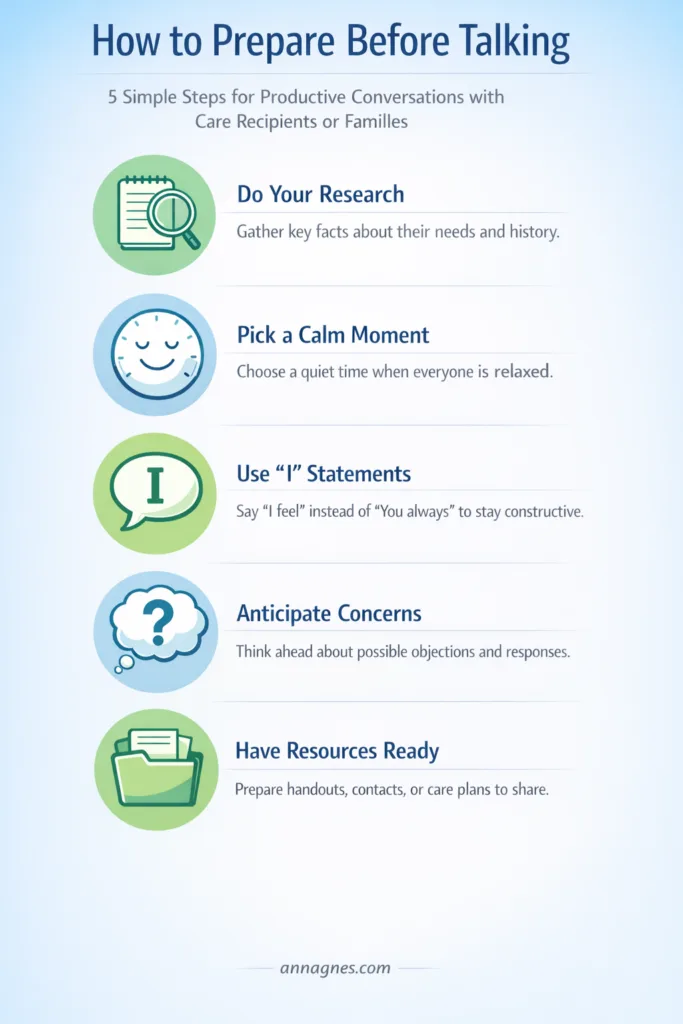
How to Prepare Before Talking

Preparation is key when your aging parent refuses help. Thinking ahead, staying empathetic, and having supportive options ready can make the conversation calmer and more productive.
1. Do Your Research
Before you start, know your options. Home care isn’t one-size-fits-all.
- Types of home care:
- Companion care: Social support, check-ins, and light assistance.
- Personal care: Help with bathing, dressing, grooming, and mobility.
- Skilled care: Medical assistance, medication management, or post-surgery care.
- Costs and coverage: Check insurance, Medicaid, or private payment options.
- Local agencies: Look for reputable providers with good reviews and clear policies.
Tip: Make a simple comparison chart for yourself. It helps explain options clearly to your parent later.
2. Pick a Calm Moment
Timing is everything. Avoid stressful or rushed situations.
3. Use “I†Statements
Framing concerns around your feelings reduces defensiveness.
- Instead of saying: “You need help!â€
- Try: “I feel worried when I see you walking alone with no one around.â€
- Other examples:
- “I’m concerned about your safety, especially in the kitchen.â€
- “I feel nervous when I hear about your recent falls.â€
Insight: Using “I†statements makes it about your concern, not their failure. It encourages dialogue instead of arguments.
4. Anticipate Concerns
Your parent may have objections. Prepare empathetic responses.
- “I don’t need anyone.â€
- Response: “I understand you value independence. We can start small and only do what you’re comfortable with.â€
- “I can do it myself.â€
- Response: “I know you’re capable. The caregiver could just handle some tasks to give you more energy for things you enjoy.â€
- “It’s expensive.â€
- Response: “We can explore part-time options or insurance coverage that might help.â€
Tip: Practice these responses aloud or write them down. Confidence helps you stay calm during the conversation.
5. Have Resources Ready
Concrete examples make the idea of home care feel less abstract.
- Bring brochures or pamphlets from homecare agencies.
- Show online resources with caregiver profiles or service explanations.
- Prepare a sample care plan showing tasks, schedule, and flexibility.
Insight: When your parent sees structured plans, it feels organized and safe, not sudden or intrusive.
Timing Matters: Choosing the Right Moment to Talk
When your aging parent refuses help, choosing the right moment is crucial. Avoid times when they’re tired, stressed, or distracted, and look for calm, relaxed moments to discuss care.
- During calm, relaxed moments – Perhaps over morning coffee or a quiet afternoon.
- After a minor incident – A small fall or difficulty with daily tasks can naturally open the discussion.
- When positive examples are available – Mention friends or neighbors who benefit from home care.
Starting a discussion in a neutral, stress-free environment reduces defensiveness and promotes openness.
Approach the Conversation With Empathy
How you start matters:
- Acknowledge Feelings: “I know you like doing things yourself.â€
- Validate Concerns: “It’s normal to feel uncomfortable with someone new at home.â€
- Offer Options, Not Ultimatums: Present different levels of support.
Empathy communicates respect and encourages listening.
Use Real-Life Scenarios
Stories can make the need tangible:
- “Remember Uncle Joe tripped last month? A caregiver could help prevent that.â€
- “Some families use a caregiver a few hours a week and still maintain independence.â€
Stories illustrate safety without judgment.
Introduce Home Care Gradually
Ease your parent into accepting support, especially when an aging parent refuses help.
- Start with light tasks like meal prep or laundry
- Schedule short visits to build comfort
- Pair care with enjoyable activities
- Let them meet caregivers first
Small steps feel supportive, not intrusive.
Highlight the Benefits of Home Care

Focus on what your parent gains, not loses:
- Maintains independence longer
- Reduces risk of falls
- Encourages social interaction
- Provides personalized attention
- Gives family peace of mind
When framed positively, home care feels empowering.
Involve the Whole Family
Sometimes multiple voices help:
- Plan a calm family discussion
- Let siblings or relatives share observations
- Focus on safety and comfort, not criticism
- Make your parent feel included, not outvoted
Family involvement can make home care feel collaborative.
Address Common Objections
Expect resistance and respond with empathy:
- “I don’t want strangers in my home.â€
- Let them meet the caregiver first and start with tasks they are comfortable with.
- “I can manage myself.â€
- Emphasize safety and prevention. Mention past near-falls or missed medications.
- “It’s too expensive.â€
- Explain flexible schedules, insurance options, or Medicaid eligibility.
Being prepared keeps the conversation calm and constructive.
Make Decisions Collaborative
Give your parent ownership of the process:
- Choose which services to try first
- Allow them to pick caregivers if possible
- Set a trial period for evaluation
- Reassess together after a few weeks
Collaboration builds trust and reduces resistance.
When Professional Guidance Helps
If your aging parent refuses help, a neutral professional can make a big difference.
- Geriatric care managers assess needs objectively
- Homecare agencies provide consultations without pressure
- Medical professionals can discuss risks factually
Professional input reassures your parent and helps them feel safer.
Tips for Ongoing Communication

Once home care begins, maintain open dialogue:
- Ask for feedback about caregivers
- Check in frequently, respecting privacy
- Celebrate successes like safer routines or fewer missed medications
- Adjust care plans as needs change
Ongoing communication ensures long-term comfort and cooperation.
Recognizing Emotional Needs
When your aging parent refuses help, it’s often tied to emotional needs. Understanding their feelings, fears, and desire for independence helps you approach home care with empathy and respect.
- Companionship reduces loneliness
- Encourages social interaction through hobbies or activities
- Provides reassurance for both parent and family
A caregiver’s role is more than tasks—it’s about quality of life at home.
Safety First: Practical Home Adjustments
Small home modifications reduce risk:
- Non-slip mats in bathrooms
- Grab bars near toilets and showers
- Clear pathways free from clutter
- Proper lighting in hallways and stairs
These adjustments work hand-in-hand with home care support.
Creating a Comfortable Routine
Routines help seniors feel in control, which can make it easier to support them when an aging parent refuses help.
- Set consistent caregiver visit times
- Incorporate favorite activities into the day
- Allow flexibility when needed
- Use routines to build trust and cooperation
Consistency reduces anxiety and increases acceptance.
Engaging Your Parent in the Process

Let your parent feel empowered by involving them in decisions, even when an aging parent refuses help.
- Ask for their preferences in care tasks
- Encourage questions about the caregiver and schedule
- Respect their feedback and adjust plans accordingly
Empowerment reduces resistance and fosters trust.
Taking the Next Step With Confidence
Navigating an aging parent who refuses help can feel overwhelming. But with empathy, preparation, and small steps, families can introduce home care at home without conflict.
By recognizing warning signs early, approaching conversations thoughtfully, and highlighting benefits, you protect your loved one while respecting their independence.
When you’re ready to take the next step, ANN&AGNES Homecare Agency can help. Our compassionate team works with families to create personalized home care plans that fit your loved one’s unique needs. From light daily assistance to full support at home, we ensure seniors stay safe, comfortable, and independent.
Reach out to ANN&AGNES Healthcare Solution Agency at (832) 855-8443 or visit our website to schedule a consultation. Together, we can make home care a positive, empowering experience for your loved one.