

Families today are facing complex decisions when it comes to caring for loved ones who need ongoing support. Whether the need arises from aging, intellectual and developmental disabilities (IDD), chronic health conditions, or neurological challenges, one question continues to surface: Where can my loved one receive the best care while maintaining dignity and quality of life?
Increasingly, the answer is home.
The benefits of homecare extend beyond basic assistance. In-home support allows individuals to remain in familiar environments while receiving personalized care that respects routines, preferences, and independence. For families, homecare offers reassurance, flexibility, and a collaborative approach that adapts as needs change.
As healthcare continues shifting toward person-centered models, homecare has become a preferred option—not as a last resort, but as a proactive, empowering choice.
Why Families Are Shifting Toward In-Home Support
Homecare refers to professional support services delivered in an individual’s own home or family residence. These services can include personal assistance, habilitation, therapeutic support, and daily living assistance, depending on the individual’s needs.
Unlike institutional or facility-based care, homecare is designed around the person—not the schedule or structure of a facility. Care happens where life already exists.
Families are increasingly choosing in-home support because it offers:
- Familiar surroundings that reduce stress
- Greater involvement in care decisions
- Flexible service delivery
- Personalized attention
Homecare supports not only physical needs but also emotional stability, autonomy, and community connection.
Who Can Benefit from Homecare

Homecare supports individuals across many life stages by adapting care to unique abilities, health needs, and daily routines. Its flexible, person-centered approach makes it a valuable option for both temporary assistance and ongoing support.
Homecare may benefit:
- Individuals with intellectual and developmental disabilities
- People with brain injuries or neurological conditions
- Older adults experiencing functional decline
- Individuals managing chronic health conditions
- Families seeking long-term, community-based support
Because services are personalized, homecare can be tailored to meet evolving needs over time. This adaptability allows individuals to receive the right level of care whether they require short-term help or lifelong support.
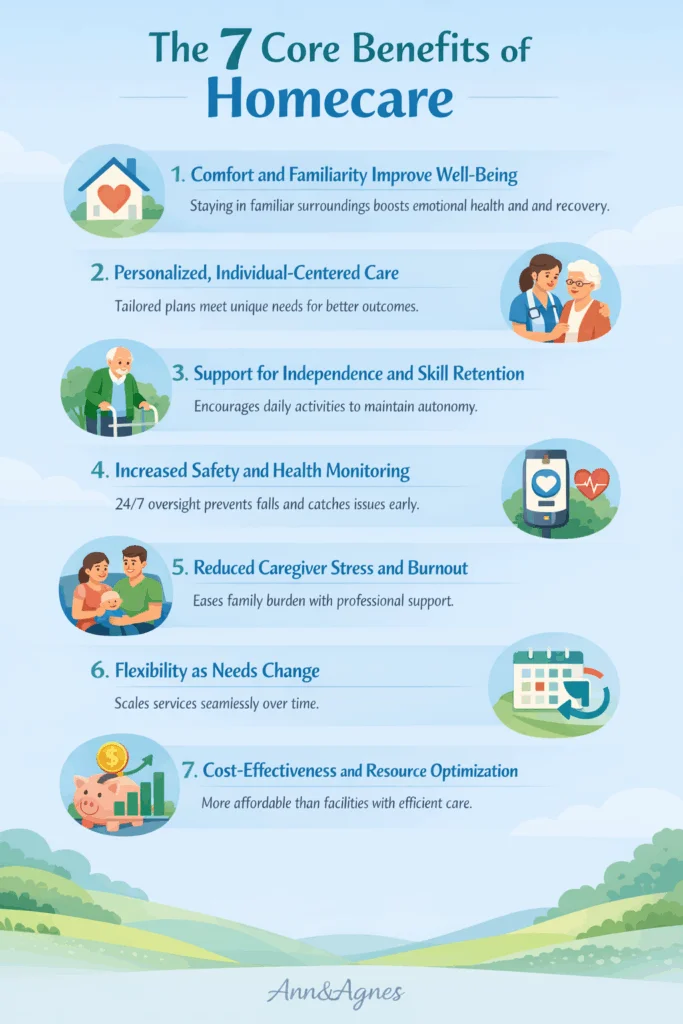
The 7 Core Benefits of Homecare
The benefits of homecare are multi-dimensional, addressing physical, emotional, social, and practical needs. Below are key advantages families consistently identify as meaningful.
1. Comfort and Familiarity Improve Well-Being
Remaining at home allows individuals to stay connected to familiar routines, personal belongings, and meaningful spaces. This sense of familiarity plays a powerful role in overall well-being.
Benefits include:
- Reduced anxiety and confusion
- Greater emotional security
- Improved sleep and daily engagement
For individuals with cognitive impairments or developmental disabilities, consistency in environment often leads to better emotional regulation and participation.
2. Personalized, Individual-Centered Care
Homecare is tailored—not standardized.
Support plans are built around the individual’s strengths, challenges, preferences, and goals. This personalization allows care to feel supportive rather than intrusive.
Personalized homecare may include:
- Assistance paced to the individual’s abilities
- Respect for cultural, personal, and family preferences
- Care strategies aligned with daily routines
This approach reinforces dignity and promotes trust between caregivers, individuals, and families.
3. Support for Independence and Skill Retention
One of the most meaningful benefits of homecare is its focus on supporting, not replacing, independence.
In-home care helps individuals:
- Maintain daily living skills
- Practice decision-making
- Participate in household activities
By encouraging involvement rather than dependence, homecare supports long-term autonomy and self-confidence.
4. Increased Safety and Health Monitoring
The home environment can be adapted to support safety in ways that are often more effective than unfamiliar settings.
Homecare professionals assist with:
- Safe mobility and transfers
- Fall prevention strategies
- Monitoring changes in physical or behavioral health
Early recognition of concerns helps prevent emergencies and supports more stable health outcomes over time.
5. Reduced Caregiver Stress and Burnout
Family caregivers often carry enormous responsibility. Homecare provides critical support without removing families from the care process.
Benefits for caregivers include:
- Relief from constant hands-on demands
- Professional guidance and reassurance
- Improved balance between caregiving and personal life
Homecare transforms caregiving into a shared effort rather than a solitary burden.
6. Flexibility as Needs Change
Life is not static, and care shouldn’t be either.
Homecare services can be adjusted to reflect:
- Changes in mobility or health
- Recovery from illness or injury
- Increased or decreased support needs
This flexibility allows individuals to remain at home even as circumstances evolve, avoiding unnecessary transitions.
7. Cost-Effectiveness and Resource Optimization
While care decisions should never be based on cost alone, homecare is often a more sustainable and efficient option compared to long-term institutional placement.
When care is delivered in the home, resources are used more intentionally. Support is tailored to actual daily needs rather than generalized facility-based models, allowing families and systems to focus on what truly matters.
Cost-effectiveness in homecare often includes:
- Reduced reliance on institutional or residential facilities
- More targeted use of Medicaid waiver services
- Care delivered only when and where it is needed
Homecare also helps prevent avoidable hospitalizations and emergency interventions by offering consistent monitoring and early support.
How Homecare Supports Individuals with IDD and Related Conditions
For individuals with intellectual and developmental disabilities or related neurological conditions, homecare offers long-term stability and real-world skill development.
Home-based services support:
- Daily living skills practiced in natural environments
- Community participation and social inclusion
- Habilitation aligned with personal goals
Homecare aligns closely with Medicaid waiver programs, which prioritize keeping individuals out of institutional settings while ensuring they receive appropriate support.
Organizations like ANN&AGNES Homecare Agency understand that individuals with IDD thrive when care is consistent, respectful, and rooted in everyday life—not confined to clinical settings.
Choosing Homecare Is Choosing Continuity
Transitions can be disruptive—especially for individuals who depend on routine and familiarity to feel safe and regulated. Homecare reduces these disruptions by allowing care to take place within a stable, consistent environment where daily life already happens.
Continuity of care supports:
- Stronger caregiver relationships
- Consistent routines and expectations
- Better long-term emotional and physical outcomes
- Increased trust between individuals and care providers
- Reduced anxiety related to environmental changes
- More effective communication among care teams and families
- Improved adherence to care plans and daily supports
- Greater overall stability in daily living
When care remains consistent, individuals are more likely to feel secure, engaged, and confident in their surroundings. Over time, this stability supports healthier outcomes and a stronger sense of well-being.
Is Homecare the Right Choice?

Homecare is not the right solution for every situation, but for many families, it provides a thoughtful balance between support and independence. It allows care to be delivered in a way that respects personal routines, preferences, and long-term quality-of-life goals.
Homecare may be a strong option if:
- The individual prefers to remain at home
- Family involvement is important
- Long-term or ongoing support is needed
- Community-based living is a priority
- The individual benefits from consistent routines and familiar surroundings
- Care needs can be safely managed outside an institutional setting
- Flexibility in scheduling and services is important
- Maintaining independence and daily life skills is a key goal
Understanding available services, eligibility requirements, and support options helps families make confident, informed decisions. With the right information, families can choose care that aligns with both practical needs and compassionate values.
Take the Next Step with ANN&AGNES Healthcare Solutions
At ANN&AGNES Healthcare Solutions, homecare is more than a service—it is a commitment to dignity, understanding, and person-centered support. Care is designed to meet individuals where they are, supporting independence while honoring unique needs and life experiences.
Whether you are exploring homecare for yourself or a loved one, ANN&AGNES Healthcare Solutions offers guidance, clarity, and compassionate care every step of the way.
Reach out today to learn how homecare services can support safe, meaningful living—right at home.