
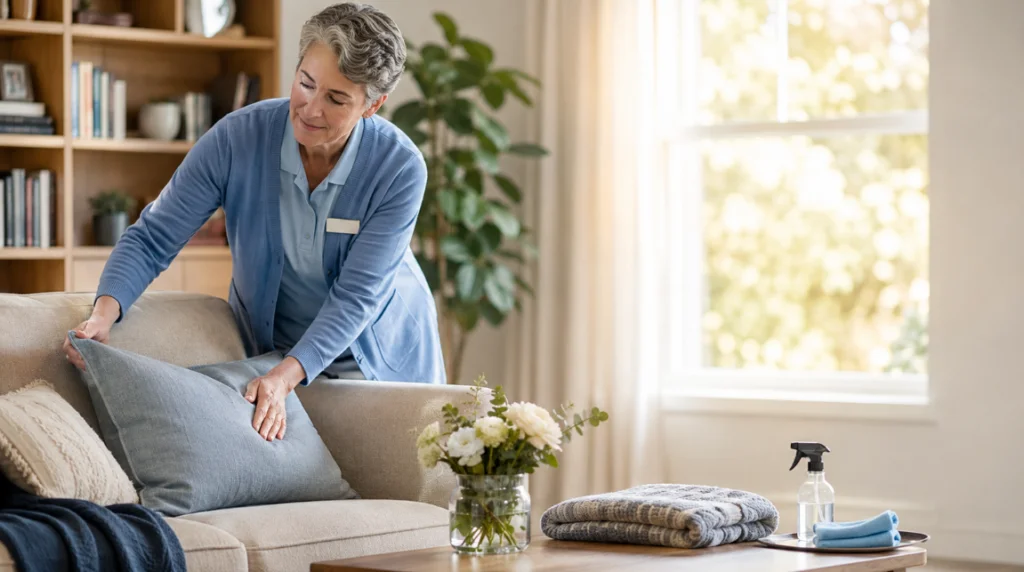
A clean home does more than look nice. For older adults, individuals recovering from illness, or people living with disabilities, a tidy and organized living space can directly affect safety, comfort, independence, and emotional well-being. That is why light housekeeping has become such an important part of modern home care services. While many people assume it simply means a little dusting or laundry, the reality is much broader and more meaningful.
Families are often surprised to learn how much stress can be reduced when someone receives regular help with household upkeep. Small tasks that once felt easy can become physically exhausting or even dangerous over time. Understanding what light housekeeping includes—and what it does not—can help families make informed decisions about home care support while ensuring loved ones can continue living safely and comfortably at home.
What Is Light Housekeeping in Home Care?
In a home care setting, light housekeeping refers to routine household tasks that help maintain a safe, clean, and functional living environment. These services are considered non-medical support and are usually designed to assist individuals who may struggle to keep up with daily chores on their own.
The goal is not deep cleaning or professional janitorial work. Instead, light housekeeping focuses on maintaining cleanliness and reducing hazards that could affect health or mobility.
Common light housekeeping tasks often include:
- Sweeping and vacuuming floors
- Washing dishes
- Wiping kitchen counters
- Doing laundry
- Changing bed linens
- Taking out trash
- Organizing commonly used spaces
- Dusting reachable surfaces
- Cleaning bathrooms lightly
- Making the bed
These tasks may sound simple, but for someone with arthritis, balance issues, chronic illness, fatigue, or cognitive decline, even basic chores can become overwhelming.
Why Light Housekeeping Matters More Than People Realize
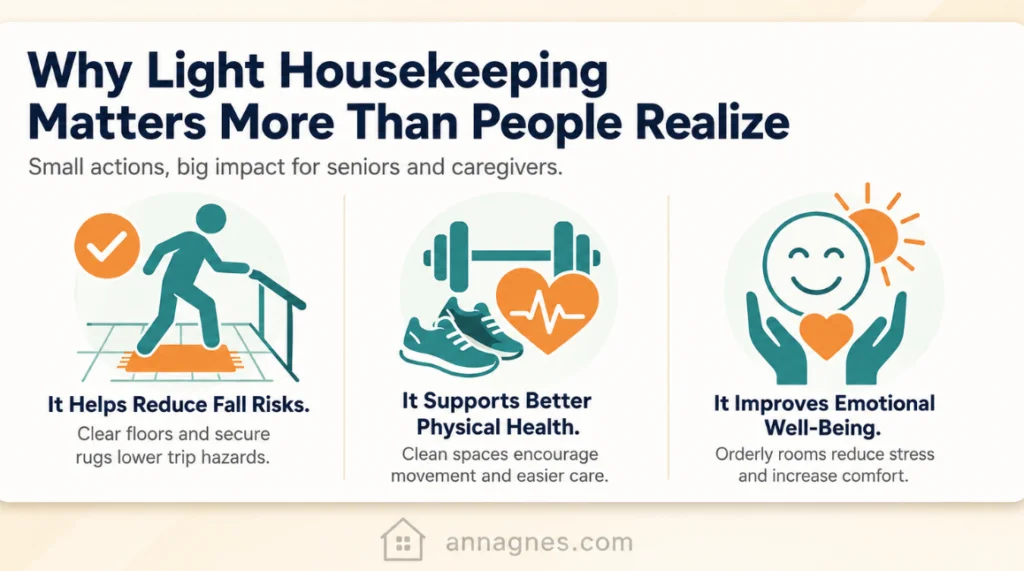
Many people underestimate how much the condition of a home affects physical and mental health. Clutter, dirt, spills, and laundry buildup can quickly create unsafe living conditions, especially for seniors or individuals with limited mobility.
Light housekeeping helps create an environment that supports both independence and peace of mind.
1. It Helps Reduce Fall Risks
Falls are one of the leading causes of injury among older adults. Cluttered walkways, loose items on the floor, or overflowing laundry baskets can easily become tripping hazards.
Routine housekeeping can help by:
- Keeping pathways clear
- Removing unnecessary clutter
- Cleaning spills promptly
- Ensuring commonly used areas stay organized
- Maintaining safer bathroom and kitchen spaces
Even small improvements in organization can significantly reduce the chance of accidents at home.
2. It Supports Better Physical Health
A cleaner environment often means fewer health risks. Dust, spoiled food, overflowing trash, and dirty linens can contribute to respiratory problems, skin irritation, and the spread of bacteria.
Light housekeeping supports healthier living by helping maintain:
- Cleaner air quality
- Sanitary food preparation spaces
- Fresh bedding and clothing
- Proper waste disposal
- Better overall hygiene
For individuals with weakened immune systems or chronic conditions, maintaining cleanliness becomes even more important.
3. It Improves Emotional Well-Being
Living in a messy or disorganized home can increase stress, frustration, embarrassment, and feelings of helplessness. On the other hand, a clean environment can improve mood and create a greater sense of calm.
Many individuals feel emotionally lighter when their surroundings are manageable and comfortable. Something as simple as freshly washed sheets or a tidy kitchen can provide reassurance and dignity.
Who Benefits Most From Light Housekeeping?
Light housekeeping can help a wide range of individuals, not just seniors. Anyone experiencing physical, emotional, or cognitive challenges may benefit from extra support around the home.
1. Older Adults Aging in Place
Many seniors want to remain in their homes for as long as possible. However, maintaining a household can become difficult with age.
Tasks like bending, lifting, reaching, and carrying laundry baskets may increase the risk of injury. Light housekeeping helps older adults maintain independence without sacrificing safety.
2. Individuals Recovering From Surgery or Illness
Recovery often requires rest and limited physical strain. Household chores can slow healing or worsen discomfort during recovery periods.
Temporary housekeeping support may help individuals focus on:
- Healing properly
- Following medical instructions
- Conserving energy
- Avoiding unnecessary strain
3. People Living With Disabilities
Individuals with physical disabilities or mobility limitations may need help completing certain household tasks safely and efficiently.
Light housekeeping can help maintain routine and comfort without requiring excessive physical exertion.
4. Family Caregivers
Family caregivers often juggle jobs, parenting responsibilities, appointments, and emotional stress. Managing household chores on top of caregiving duties can quickly lead to burnout.
Having assistance with light housekeeping may relieve pressure and allow caregivers to focus more on quality time and emotional support.
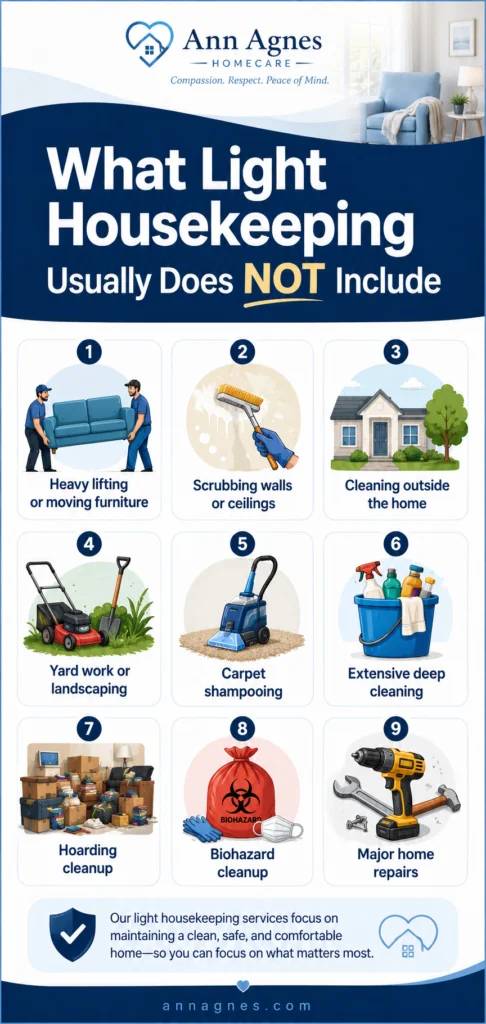
What Light Housekeeping Usually Does NOT Include
One of the most common misunderstandings about light housekeeping is assuming it includes deep cleaning services. In most home care settings, it does not.
There are limits to what caregivers are expected or authorized to do.
Tasks typically NOT included may involve:
- Heavy lifting or moving furniture
- Scrubbing walls or ceilings
- Cleaning outside the home
- Yard work or landscaping
- Carpet shampooing
- Extensive deep cleaning
- Hoarding cleanup
- Biohazard cleanup
- Major home repairs
The purpose of light housekeeping is maintenance and safety, not full-scale professional cleaning.
Understanding these boundaries helps families set realistic expectations while ensuring caregivers can work safely.
The Connection Between Light Housekeeping and Independence
One of the most valuable aspects of light housekeeping is how it supports independent living. Many people do not need medical care every day, but they may struggle with the physical demands of household upkeep.
Without help, chores can pile up quickly and create unsafe or unmanageable conditions. Eventually, this may force someone to leave their home earlier than expected.
Routine support allows individuals to continue managing daily life with greater confidence.
This may include:
- Keeping frequently used spaces functional
- Supporting mobility within the home
- Preventing overwhelming messes
- Reducing stress associated with unfinished chores
- Preserving dignity and personal routine
Sometimes the difference between staying at home and needing alternative care comes down to consistent help with ordinary tasks.
How Light Housekeeping Supports Cognitive Health
For individuals experiencing memory loss or cognitive decline, household organization becomes especially important.
A cluttered environment can increase confusion, frustration, and disorientation. Regular housekeeping support helps maintain structure and predictability.
This can help by:
- Keeping important items in consistent places
- Reducing overstimulation from clutter
- Supporting daily routines
- Creating calmer living spaces
- Improving overall comfort
People living with dementia or cognitive challenges often function better in organized and familiar environments.
Small Household Tasks Can Become Big Physical Challenges
People who have never experienced mobility limitations sometimes underestimate how demanding everyday chores can be.
Simple activities may involve:
- Standing for long periods
- Reaching overhead
- Carrying items
- Repeated bending
- Twisting movements
- Navigating slippery surfaces
For someone with chronic pain, fatigue, balance issues, or arthritis, these movements may cause discomfort or injury.
Even vacuuming a small room or carrying laundry downstairs can become exhausting. Light housekeeping helps reduce that physical burden while allowing individuals to conserve energy for more meaningful activities.
The Emotional Relief Families Experience
Family members often feel guilty when they cannot keep up with a loved one’s household needs. They may notice clutter increasing or hygiene slipping but struggle to manage everything alone.
Support with light housekeeping can ease emotional strain for families by helping them feel reassured that their loved one’s environment remains safe and comfortable.
This often leads to:
- Reduced caregiver stress
- Fewer household conflicts
- Better family relationships
- Improved peace of mind
- More quality time together
Instead of spending every visit cleaning, family members can focus more on conversation, companionship, and emotional connection.
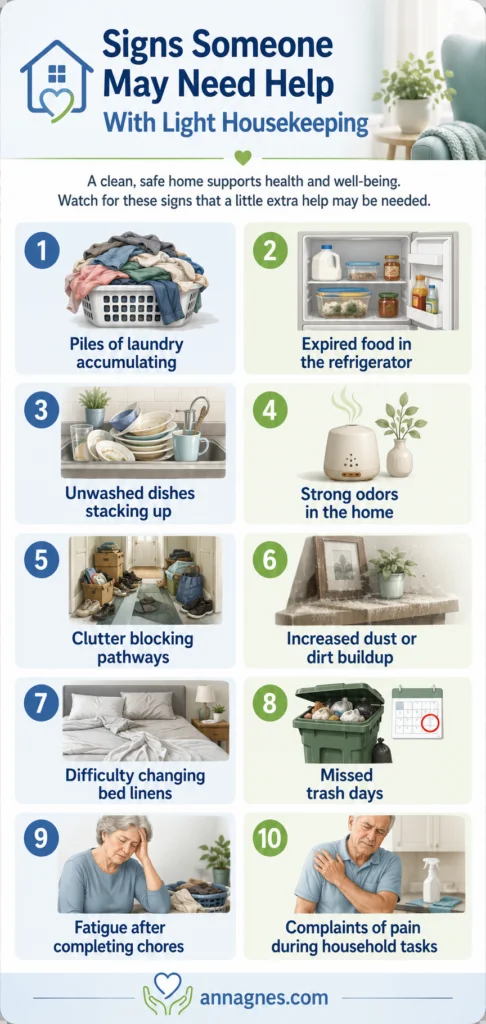
Signs Someone May Need Help With Light Housekeeping
It is not always obvious when someone is struggling with household maintenance. Many people try to hide difficulties because they value independence and privacy.
However, certain signs may suggest extra support could help.
Watch for:
- Piles of laundry accumulating
- Expired food in the refrigerator
- Unwashed dishes stacking up
- Strong odors in the home
- Clutter blocking pathways
- Increased dust or dirt buildup
- Difficulty changing bed linens
- Missed trash days
- Fatigue after completing chores
- Complaints of pain during household tasks
Addressing these concerns early may prevent larger safety and health issues later.
How Often Is Light Housekeeping Needed?
There is no single schedule that works for everyone. Some individuals may only need occasional assistance, while others benefit from regular daily or weekly support.
The frequency usually depends on factors such as:
- Physical ability
- Health conditions
- Size of the home
- Presence of family support
- Cognitive function
- Personal preferences
Some people only require help with laundry and meal cleanup, while others need broader household assistance several times each week.
Flexible support allows care plans to adjust as needs change over time.
The Difference Between Cleaning and Caring
One important thing to understand is that light housekeeping within home care is not just about cleanliness. It is about supporting quality of life.
There is a major difference between someone hiring a cleaning service once a month and receiving consistent household support as part of caregiving.
In home care settings, housekeeping tasks are often connected to:
- Safety monitoring
- Daily routine support
- Emotional comfort
- Wellness observation
- Functional independence
Caregivers may notice important changes while helping around the home, such as increased weakness, confusion, appetite changes, or mobility concerns.
This broader awareness can help families stay informed about evolving needs.
A Cleaner Home Can Support Better Nutrition
Meal preparation and kitchen cleanliness often go hand in hand. When kitchens become cluttered or difficult to manage, nutrition may suffer.
Light housekeeping helps maintain a more functional cooking and eating environment by:
- Washing dishes regularly
- Wiping food preparation surfaces
- Organizing refrigerators
- Removing expired food
- Maintaining cleaner dining spaces
When the kitchen feels manageable, individuals may feel more motivated to prepare balanced meals and stay hydrated.
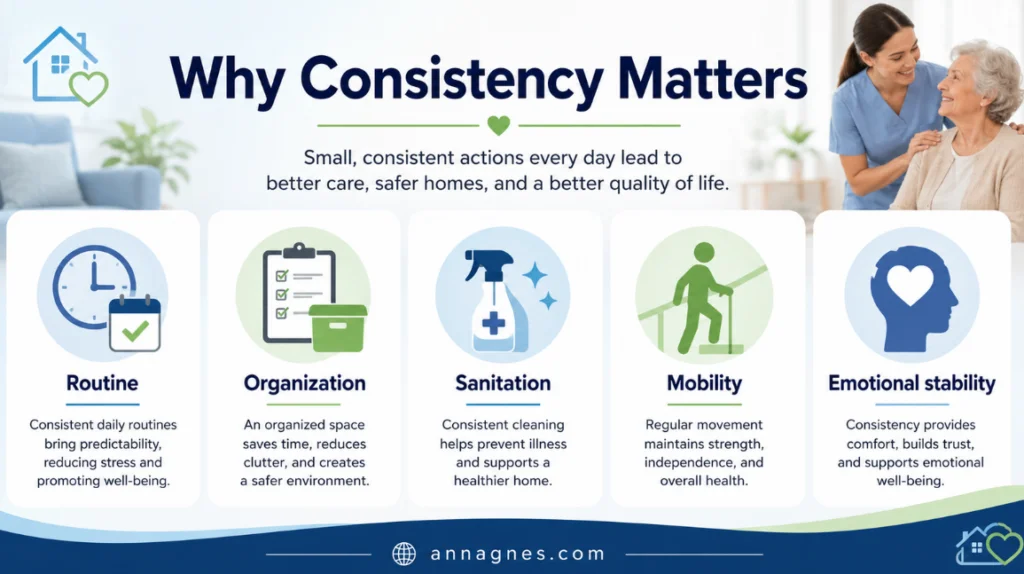
Why Consistency Matters
Occasional cleaning may help temporarily, but consistent upkeep is what truly supports long-term comfort and safety.
Small tasks completed regularly prevent problems from becoming overwhelming.
Consistency helps maintain:
- Routine
- Organization
- Sanitation
- Mobility
- Emotional stability
For many individuals, regular light housekeeping becomes an important part of maintaining normalcy and independence at home.
A Safer, Cleaner Home Starts With the Right Support
Light housekeeping may sound simple, but its impact reaches far beyond basic chores. A clean and organized home can support safety, health, dignity, emotional well-being, and independence for individuals facing physical or cognitive challenges. From reducing fall risks to easing caregiver stress, these everyday tasks often play a much larger role in quality of life than many families initially realize.
When daily chores begin to feel overwhelming, having reliable support can make home life more manageable and comfortable. ANN&AGNES Homecare Agency provides compassionate homecare services designed to help individuals maintain safer and more functional living environments while preserving independence and dignity.