

Finding the right support for an aging parent, recovering loved one, or someone living with a disability is never an easy task. Families often step into this responsibility with limited experience, emotional pressure, and urgent care needs. In many cases, decisions are made quickly, especially when daily assistance becomes necessary. However, this urgency can sometimes lead to overlooking critical warning signs during the process of hiring a caregiver.
The truth is, caregiving is deeply personal work. It involves trust, consistency, and the ability to handle vulnerable moments with patience and professionalism. When the wrong person is chosen, it can lead to emotional distress, safety risks, and even financial strain. That’s why understanding red flags early in the selection process is essential. Being informed helps families make decisions that protect both their loved ones and their peace of mind.
The Importance of the Caregiver Role
A caregiver does far more than assist with daily tasks. They often become a key presence in a person’s life, supporting physical needs while also providing emotional stability. This may include help with mobility, hygiene, meals, medication reminders, and companionship.
Because of this close involvement, families must recognize that hiring a caregiver is not just about filling a schedule gap—it is about inviting someone into a highly sensitive environment. That responsibility requires careful evaluation and awareness of behavioral and professional standards.
When expectations are unclear or screening is rushed, families may later discover issues that could have been avoided. Understanding what proper caregiving should look like is the first step in identifying when something does not feel right.
Why Careful Screening Protects Your Loved One
Screening is more than checking references—it is a structured process that helps families assess reliability, experience, and trustworthiness. Without it, even well-meaning individuals may fall short in real caregiving situations.
A careful screening process helps families:
- Confirm experience with specific care needs
- Evaluate communication and responsiveness
- Verify background and work history
- Understand emotional temperament and patience levels
- Set clear expectations for responsibilities
When hiring a caregiver, skipping these steps can lead to inconsistency in care, safety risks, and misunderstandings about responsibilities. Families who take time during the selection process are more likely to find someone who fits both the practical and emotional needs of their loved one.
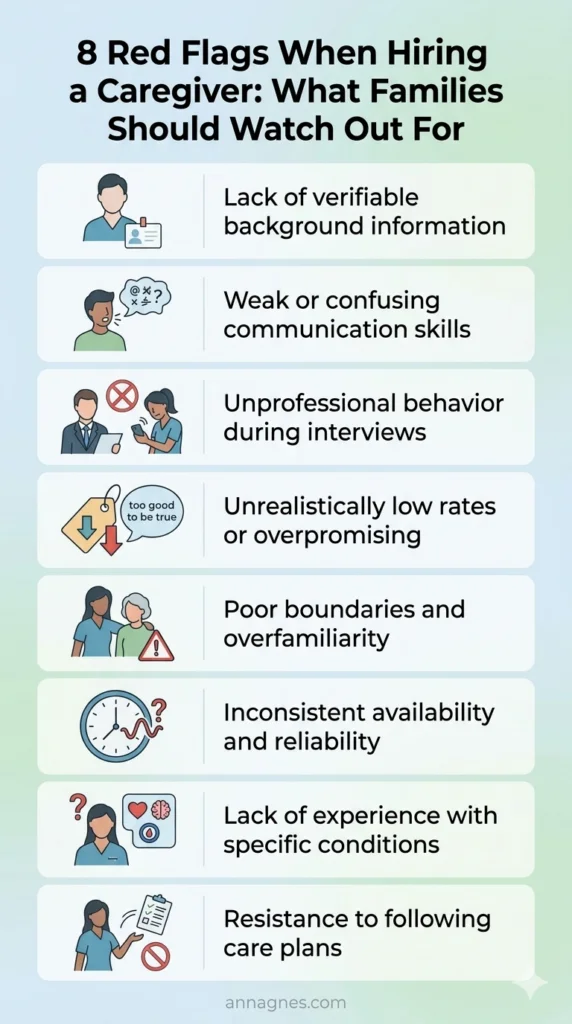
8 Red Flags When Hiring a Caregiver: What Families Should Watch Out For

Not all warning signs are obvious at first. Some appear during interviews, while others show up after care begins. Recognizing these red flags early can help prevent long-term issues.
1. Lack of Verifiable Background Information
One of the most serious red flags is when a caregiver cannot provide proof of their history or qualifications.
Watch out for:
- Missing or incomplete background checks
- No reliable references from past employers or families
- Inconsistent employment history
- Avoidance of identity or documentation requests
Transparency is a basic expectation in caregiving. If information is unclear or unavailable, it may signal risk.
2. Weak or Confusing Communication Skills
Clear communication is essential for safe and effective care. Misunderstandings can quickly turn into care errors.
Warning signs include:
- Difficulty answering basic questions
- Vague or inconsistent explanations
- Not confirming instructions or schedules
- Frequent misunderstandings during conversations
Strong caregivers listen carefully, ask clarifying questions, and ensure expectations are fully understood.
3. Unprofessional Behavior During Interviews
First impressions often reflect long-term behavior. A caregiver’s attitude during the hiring process matters.
Be cautious if you notice:
- Late arrival without explanation
- Disorganized appearance or attitude
- Excessive phone use during discussions
- Disinterest in learning about care needs
- Negative comments about past employers
Professionalism is a strong indicator of reliability in the home setting.
4. Unrealistically Low Rates or Overpromising
While affordability is important, extremely low pricing or exaggerated promises can be a concern when hiring a caregiver.
Red flags include:
- Rates far below typical market value
- Promises of skills not supported by experience
- Guaranteeing availability without structure
- Pressure to hire immediately
Quality care requires training, time, and accountability. If something sounds too good to be true, it often is.
5. Poor Boundaries and Overfamiliarity
Caregiving requires compassion, but also professional boundaries. Crossing those lines can create unsafe dynamics.
Watch for:
- Asking overly personal questions
- Becoming too emotionally involved too quickly
- Ignoring family instructions
- Attempting to control decisions outside of care duties
Healthy caregiving relationships remain respectful and structured.
6. Inconsistent Availability and Reliability
Dependability is crucial in caregiving routines. Missed shifts can disrupt health and safety.
Be alert if a caregiver:
- Frequently cancels last minute
- Arrives late without explanation
- Fails to confirm schedules
- Shows inconsistent attendance patterns
Reliability ensures continuity of care, especially for individuals with medical or daily routine needs.
7. Lack of Experience With Specific Conditions
General experience is not always enough. Some care situations require specialized knowledge.
Concerns may include:
- No experience with mobility assistance
- Limited understanding of dementia care
- Lack of post-hospital recovery experience
- Unfamiliarity with chronic illness routines
Matching experience to care needs is critical when hiring a caregiver.
8. Resistance to Following Care Plans
Care plans exist to maintain safety and consistency. Ignoring them is a serious concern.
Red flags include:
- Changing routines without approval
- Ignoring written instructions
- Making unilateral decisions
- Downplaying medical or dietary guidelines
Caregivers should follow established plans unless changes are properly discussed and approved.
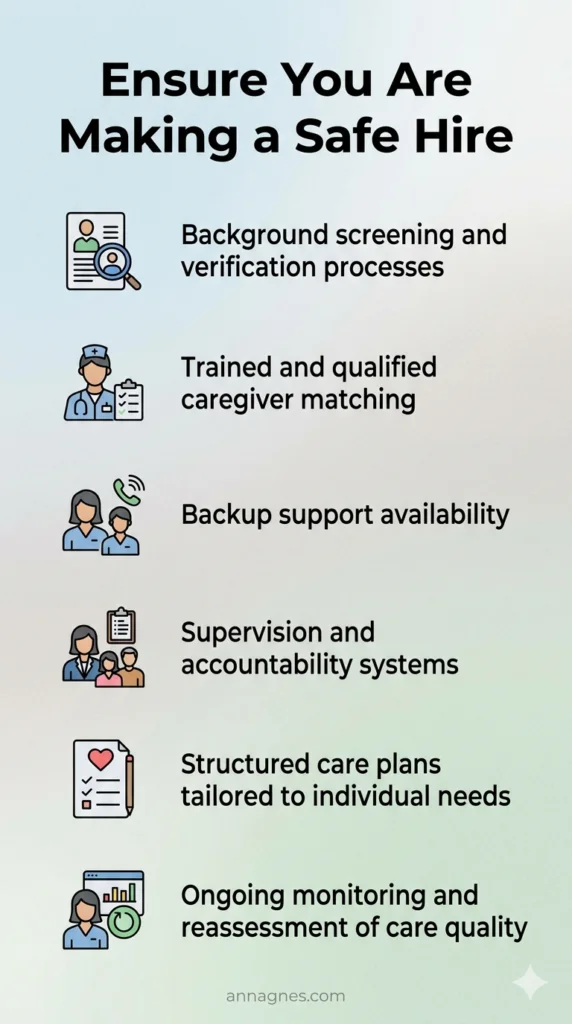
Ensure You are Making a Safe Hire
One of the most effective ways to reduce risk is ensuring a structured and well-supported hiring process. Many families underestimate how complex caregiving arrangements can become when managed independently.
Opting for Homecare Agency support can help provide added safety and structure during the selection process. Agencies typically offer:
- Background Screening and Verification Processes: Thorough checks help confirm caregiver identity, work history, references, and overall reliability before services begin.
- Trained and Qualified Caregiver Matching: Agencies work to match clients with caregivers whose experience and skill sets align with the individual’s care needs and personality.
- Backup Support Availability: If a scheduled caregiver becomes unavailable, agencies can often provide replacement coverage to avoid interruptions in care.
- Supervision and Accountability Systems: Ongoing oversight helps ensure caregivers follow care plans, maintain professionalism, and meet service expectations.
- Structured Care Plans Tailored to Individual Needs: Personalized care plans help create consistency by outlining approved tasks, schedules, preferences, and daily support requirements.
- Ongoing Monitoring and Reassessment of Care Quality: Regular evaluations allow adjustments to care as needs change and help maintain quality and safety over time.
This level of organization helps reduce uncertainty when hiring a caregiver and ensures that families are not solely responsible for every aspect of screening, scheduling, and supervision. It also creates an added layer of protection for vulnerable individuals who require consistent and reliable care.
Don’t Make a Costly Mistake—Know These Warning Signs Before You Hire
Choosing the right caregiver is not just a practical decision—it is a deeply important step that affects safety, comfort, and quality of life. Small warning signs can reveal much larger issues if they are ignored during the early stages of the hiring process.
Being aware of these red flags helps families avoid stress, prevent unsafe situations, and build a more secure care environment. When hiring a caregiver, patience and careful evaluation are always worth the effort.
If your family is currently seeking dependable, structured, and compassionate homecare support, reaching out to ANN&AGNES Homecare Agency can help ensure your loved one receives the safe and consistent care they deserve.