
Recovering after surgery is rarely as simple as going home and resting. Many individuals expect healing to happen quickly once they leave the hospital, only to discover that pain management, mobility limitations, medication schedules, and basic daily tasks can quickly become overwhelming. Even procedures that are considered minor can temporarily affect a person’s ability to cook, bathe safely, move around, or manage routine responsibilities without assistance. This is often the stage where recovery feels more demanding than expected.
This is where home care services after surgery become especially valuable, offering structured, non-medical support that helps individuals heal in a safer and more comfortable environment. With home care services after surgery, patients receive practical in-home assistance tailored to their recovery needs—whether that includes help with mobility, reminders for medication schedules, or support with everyday activities that may feel challenging during the healing process. A reliable home care provider can ease the transition from hospital to home, reduce unnecessary strain, and help families feel more confident as recovery progresses. For many individuals, healing becomes not only more manageable but also more stable when consistent support is available at home.
Why the Recovery Period After Surgery Matters More Than Many Realize
The time after surgery plays a major role in long-term healing. Whether someone has undergone joint replacement, heart surgery, abdominal surgery, cataract procedures, or another treatment, the body needs time and consistency to recover properly.
During this stage, individuals may experience:
- Limited movement or balance issues
- Fatigue and weakness
- Pain or discomfort
- Difficulty standing for long periods
- Trouble bathing or dressing independently
- Challenges preparing meals
- Missed medications or follow-up appointments
- Emotional stress or frustration
Without the right support, these issues may slow progress or increase the chance of setbacks. Home care helps bridge the gap between hospital discharge and full independence.
What Are Home Care Services After Surgery?
Home care services after surgery refer to non-medical support provided in the home to help individuals recover safely and comfortably. Care plans are typically based on the person’s condition, mobility level, and daily needs.
Depending on the situation, services may include:
- Assistance with bathing, grooming, and dressing
- Companionship and supervision
- Help with walking and transfers
- Meal preparation
- Light housekeeping
- Medication reminders
- Transportation to follow-up appointments
- Help with errands or grocery shopping
- Family respite support
This type of assistance allows individuals to focus energy on healing rather than struggling through everyday tasks.
Why Recovery Is Often Better at Home
Many people recover more comfortably in familiar surroundings. Hospitals and facilities serve an important purpose, but once a person is medically stable, home can provide emotional and physical benefits that encourage healing.
Comfort and Familiarity Reduce Stress
Being surrounded by personal belongings, favorite chairs, family photos, and a familiar routine can reduce anxiety. Stress may affect sleep, mood, and motivation, so a calm environment matters.
At home, individuals often enjoy:
- Better rest
- More privacy
- Greater emotional comfort
- Familiar meals and routines
- Easier visits with loved ones
More Personalized Attention
At home, support is centered around one individual instead of many patients at once. Caregivers can focus on the person’s schedule, preferences, and comfort needs.
Greater Independence
Many recovering adults want help—but still want dignity and control. Home care allows assistance without taking away independence. Support can be adjusted based on what the individual can safely do on their own.
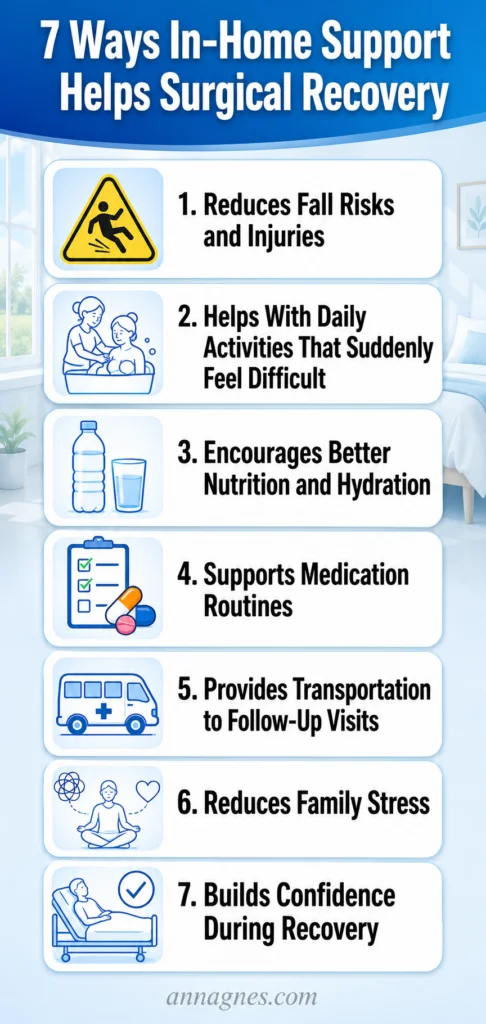
7 Ways In-Home Support Helps Surgical Recovery

Healing after surgery often depends on the right daily support. When routine tasks become difficult, in-home assistance can reduce strain, improve safety, and help recovery stay on track. From mobility help to emotional reassurance, practical support in the home often makes the healing process smoother and less stressful. This is especially true with home care services after surgery, which provide structured, personalized assistance that helps patients recover safely while remaining in the comfort of their own homes.
1. Reduces Fall Risks and Injuries
After surgery, weakness, dizziness, pain medication, or mobility restrictions may increase fall risk. This is especially common after orthopedic procedures or hospital stays.
Caregivers may help by:
- Assisting with walking
- Keeping pathways clear
- Helping with transfers in and out of bed
- Supporting bathroom trips
- Monitoring for signs of instability
This added presence can prevent accidents during a vulnerable time.
2. Helps With Daily Activities That Suddenly Feel Difficult
Simple tasks can become exhausting after surgery. Standing at the sink, bending down, reaching overhead, or climbing stairs may be temporarily difficult.
Home care providers can assist with:
- Dressing
- Bathing
- Toileting support
- Laundry
- Meal setup
- Tidying the home
This helps conserve energy for healing.
3. Encourages Better Nutrition and Hydration
Proper nutrition supports tissue repair, strength, and recovery. Yet many people do not feel like cooking after surgery.
Caregivers can help with:
- Preparing balanced meals
- Offering snacks and fluids
- Grocery support
- Following dietary preferences or restrictions
Consistent meals often improve strength and overall recovery.
4. Supports Medication Routines
Many surgical patients return home with pain relievers, antibiotics, or other temporary medications. Missing doses or taking them incorrectly may create complications.
While non-medical caregivers do not prescribe medication, they can provide reminders and help clients stay organized with schedules as permitted by care plans.
5. Provides Transportation to Follow-Up Visits
Post-surgical care often includes checkups, therapy visits, and prescription pickups. Driving may be restricted after many procedures.
Home care support can help coordinate or provide transportation assistance so appointments are not missed.
6. Reduces Family Stress
Family members often want to help but may also work full-time, care for children, or live far away. Balancing responsibilities can become overwhelming.
Home care gives families:
- Peace of mind
- Relief from constant scheduling pressure
- Backup support
- Time to simply be present as loved ones instead of full-time caregivers
7. Builds Confidence During Recovery
Many people feel discouraged when they cannot do what they normally handle alone. A steady caregiver presence can provide encouragement and reassurance as progress returns step by step.
Confidence matters because motivated individuals often participate more consistently in routines that support healing.
Who Commonly Benefits From Post-Surgery Home Care?
Many individuals benefit from home care services after surgery, especially when recovery requires extra support beyond what can be safely managed alone at home. These services are often helpful for patients recovering from a wide range of procedures who need assistance with mobility, daily activities, or post-operative routines while they heal.
- Knee or hip replacement
- Back surgery
- Heart procedures
- Hernia repair
- Cataract surgery
- Stroke-related procedures
- Abdominal surgery
- Cancer-related surgeries
- Fracture repair
Older adults and individuals living alone may especially benefit from extra support during the first days or weeks home.
Signs Someone May Need Help After Surgery
Families sometimes underestimate recovery needs. If any of the following are present, in-home support may be wise:
- Difficulty walking safely
- Trouble getting in or out of bed
- Confusion about medications
- Poor appetite
- Fatigue that limits daily tasks
- Living alone
- Frequent pain complaints
- Missed follow-up appointments
- Unsafe bathroom use
- Family burnout
Early support often prevents larger problems later.
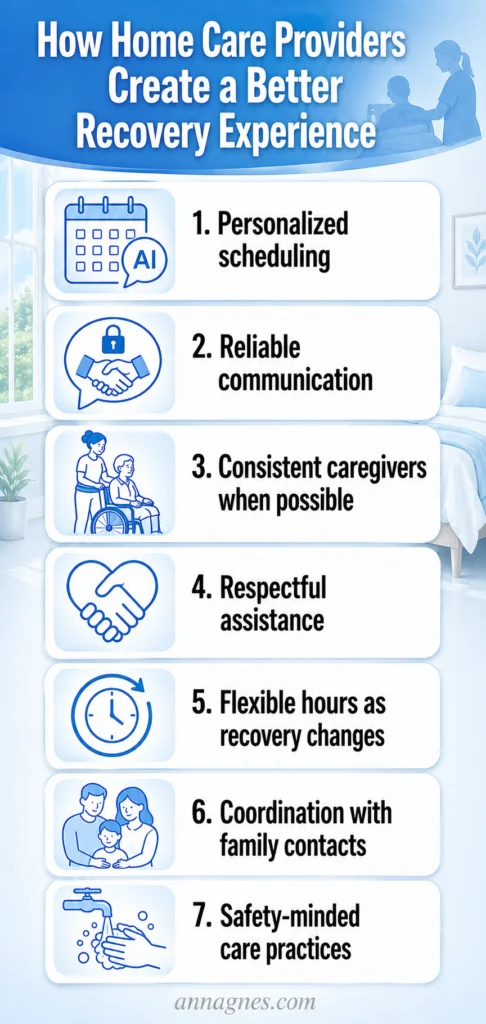
How Home Care Providers Create a Better Recovery Experience
Strong home care agencies do more than send someone to the home. With home care services after surgery, they take a personalized approach—carefully understanding each client’s recovery needs and matching the right level of support to ensure a safer, more comfortable healing experience.
A quality provider often focuses on:
- Personalized scheduling
- Reliable communication
- Consistent caregivers when possible
- Respectful assistance
- Flexible hours as recovery changes
- Coordination with family contacts
- Safety-minded care practices
This structure helps recovery feel organized rather than chaotic.
How Long Is Post-Surgery Home Care Needed?
Every recovery journey is unique, which is why the duration of home care services after surgery can vary widely. Some individuals only require short-term support for a few days, while others may benefit from ongoing assistance for several weeks or even months, depending on their healing progress and overall condition.
- Type of surgery
- Age and mobility level
- Whether the person lives alone
- Pain levels and stamina
- Physician restrictions
- Availability of family help
Care plans can often increase or decrease as independence returns.
Choosing the Right Home Care Agency After Surgery
Not all agencies provide the same experience. Families should look for providers who emphasize professionalism, compassion, and responsive communication.
Helpful questions include:
- Are caregivers trained for post-surgery support needs?
- Is scheduling flexible?
- How are care plans adjusted over time?
- What happens if a caregiver is unavailable?
- How is family communication handled?
- Are services customized to the client?
The right fit can make recovery far less stressful.
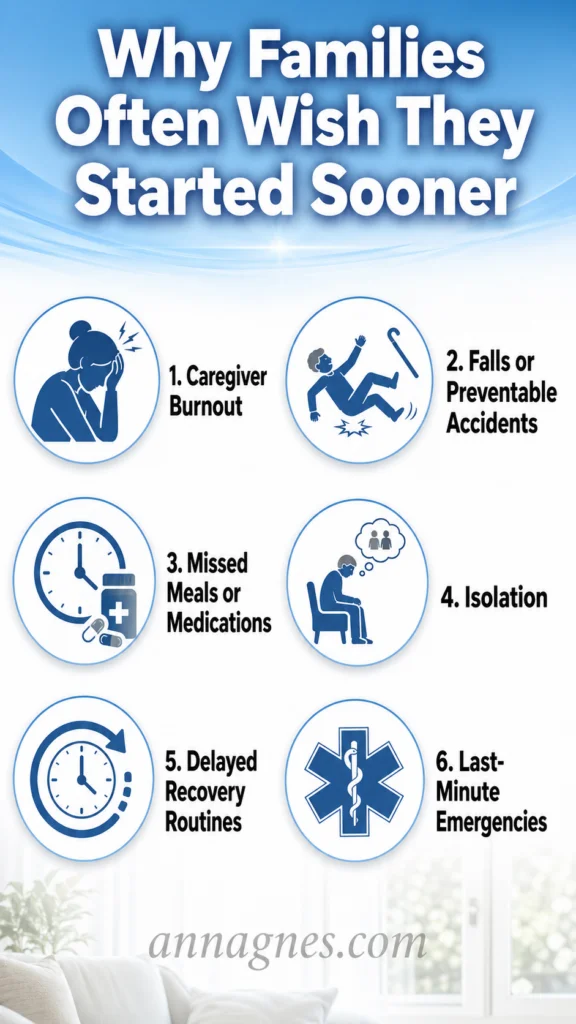
Why Families Often Wish They Started Sooner
A common pattern happens after surgery: families try to manage alone, become exhausted, and call for help only after stress builds.
Starting earlier can help avoid:
- Caregiver burnout
- Falls or preventable accidents
- Missed meals or medications
- Isolation
- Delayed recovery routines
- Last-minute emergencies
Support does not have to mean full-time care. Even a few hours a day can make a meaningful difference.
A Smoother Recovery Starts With the Right Support
Healing after surgery often requires more than rest. It may involve mobility assistance, meal preparation, medication reminders, transportation, emotional encouragement, and help with everyday routines. Home care services provide practical in-home support that allows individuals to recover with greater comfort, dignity, and confidence. For many families, this type of assistance turns a stressful recovery period into a safer and more manageable experience.
When extra help is needed after surgery, ANN&AGNES Homecare Agency is ready to provide compassionate, dependable in-home support tailored to each client’s needs. Whether care is needed for a short recovery period or longer-term assistance, their team is committed to helping clients heal comfortably at home while giving families peace of mind.