
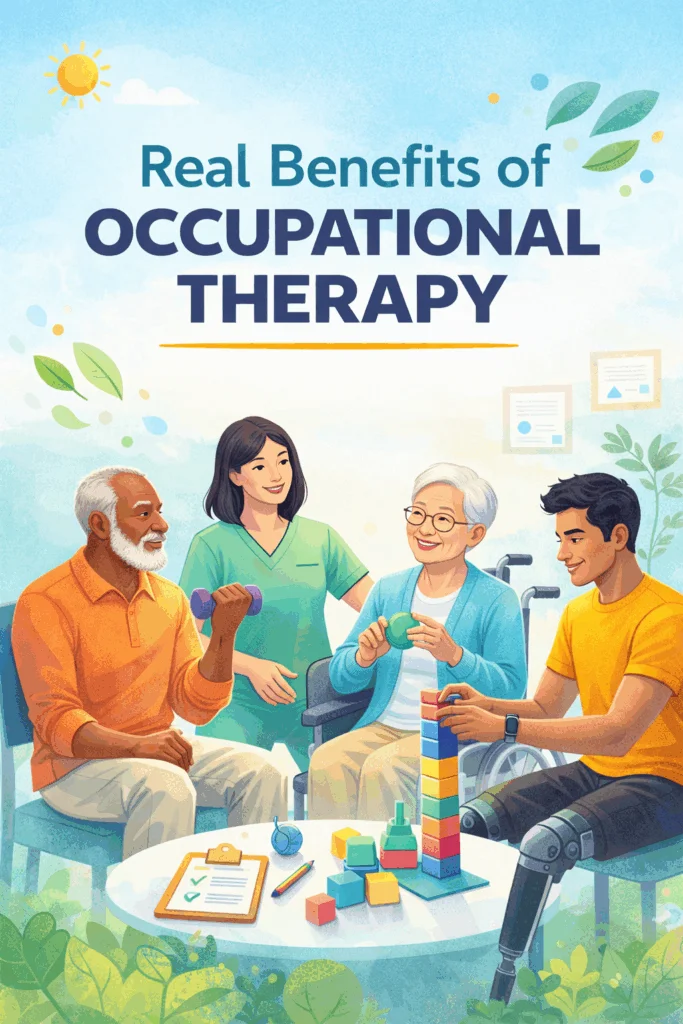
The benefits of occupational therapy extend far beyond simple exercises or structured activities—it’s a powerful tool for fostering independence and long-term well-being. For individuals with intellectual and developmental disabilities (IDD) or related conditions, occupational therapy can transform daily life by teaching practical skills, enhancing confidence, and promoting self-sufficiency. Its impact goes beyond physical improvement, addressing cognitive, emotional, and social needs to create a truly holistic approach to health. Families who recognize these benefits are better equipped to support their loved ones in achieving meaningful daily independence.
Accessing occupational therapy often involves understanding the programs and resources that make it possible. Medicaid, Home and Community-Based Services (HCS), and other supportive programs can provide critical access, ensuring therapy is sustainable over the long term. Navigating these systems can be as essential as the therapy itself.
With ongoing support, occupational therapy helps individuals maintain their skills, prevent secondary health challenges, and participate more fully in their communities. By strengthening the connection between personal ability and daily independence, OT gives families confidence that their loved ones are living safely, meaningfully, and with purpose. Over time, these benefits ripple outward, enriching not only the individual’s life but also the lives of those around them. Integrating occupational therapy into a broader care plan lays the foundation for lasting wellness, resilience, and empowerment.
What Occupational Therapy Really Does
Occupational therapy is designed to help individuals live as independently as possible, while improving physical, cognitive, and emotional functioning. Here’s how it works:
- Promotes Daily Living Skills: Helps individuals perform tasks such as dressing, grooming, cooking, and other essential activities.
- Enhances Mobility and Strength: Custom exercises improve balance, coordination, and overall physical resilience.
- Supports Cognitive Functioning: OT helps with attention, memory, and problem-solving skills that are often affected in individuals with brain injuries or developmental conditions.
- Boosts Emotional Well-being: Participation in meaningful activities can reduce anxiety, improve mood, and foster confidence.
For people with IDD or related conditions, these benefits are not just about improving physical ability—they directly impact quality of life and long-term independence.
Why Long-Term Wellness Depends on Regular OT
Occupational therapy isn’t a short-term fix. Long-term wellness relies on consistent, personalized interventions that adapt as needs change. Key benefits include:
- Prevention of Secondary Health Issues: Regular OT can prevent falls, muscle atrophy, and joint complications.
- Increased Independence in the Community: Developing life skills means fewer hours of hands-on care and more personal autonomy.
- Support for Caregivers: Families benefit when their loved ones are empowered to complete daily tasks safely, reducing stress and burnout.
- Integration with Other Therapies: OT often complements behavioral, physical, and speech therapies for a holistic approach to health.
5 Benefits of Occupational Therapy
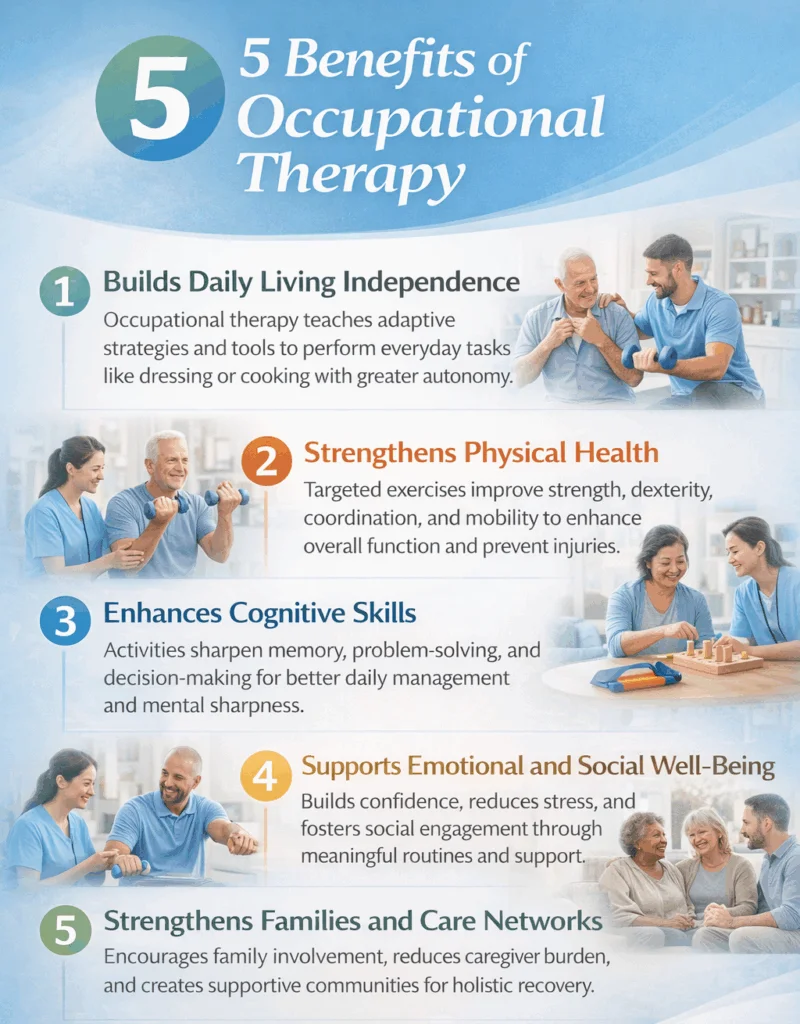
Occupational therapy (OT) doesn’t just impact the individual receiving care—it creates a positive ripple effect that touches families and communities. Beyond helping loved ones gain independence, OT strengthens daily life skills, emotional health, and long-term wellness.
1. Builds Daily Living Independence
OT helps individuals master everyday tasks like dressing, cooking, and personal hygiene. Therapists break activities into manageable steps tailored to each person’s abilities. This personalized guidance increases confidence and promotes self-reliance. Over time, individuals can accomplish more on their own, easing the demands on family caregivers.
2. Strengthens Physical Health
Through targeted exercises, OT improves strength, coordination, and balance. Regular sessions reduce the risk of falls and other injuries. Improved mobility allows individuals to participate more fully in both home life and community activities.
3. Enhances Cognitive Skills
Occupational therapists create exercises that boost memory, attention, and problem-solving. For those with brain injuries or developmental conditions, these activities help maintain mental sharpness and daily functional skills.
4. Supports Emotional and Social Well-Being
Meaningful engagement in OT activities can reduce stress, anxiety, and feelings of frustration. It fosters a sense of accomplishment and encourages participation in social interactions. Therapists often integrate communication and community involvement into sessions, helping individuals navigate relationships more confidently. By building both practical and emotional skills, OT empowers individuals to engage more fully in their environment, improving overall quality of life.
5. Strengthens Families and Care Networks
OT benefits extend beyond the individual to the family and caregivers. By teaching strategies for independence and safe task completion, OT reduces caregiver stress and burnout. Families become active participants in the therapy process, creating a supportive, educated care network. These gains foster a stronger home environment and encourage broader community inclusion.
The Ripple Effect: How OT Benefits the Whole Family
Investing in occupational therapy does more than help the individual receiving care—it supports the family as well.
- Reduces caregiver stress: By equipping loved ones with skills to manage daily activities safely.
- Fosters confidence and self-sufficiency: Less dependency on family members for routine tasks.
- Encourages family involvement: OT plans often involve family education and training, creating a supportive care network.
- Builds a stronger community: Individuals who can participate more fully in home and community life contribute to a more inclusive environment.
Understanding Eligibility: Accessing Occupational Therapy Through Medicaid and HCS

For families of individuals with IDD or related conditions, access to occupational therapy can be more structured—and more beneficial—through programs like Medicaid’s Home and Community-Based Services (HCS).
HCS is a Texas Medicaid waiver program that provides services to individuals with an intellectual disability or related condition, allowing them to live in the community rather than an institutional setting.
Eligibility generally includes:
- An IQ of 69 or below (or a related condition with IQ of 75 or below).
- Mild to severe deficits in adaptive behavior.
- Medicaid eligibility.
- Not being enrolled in another Medicaid waiver program.
Once enrolled, HCS can cover occupational therapy as part of its comprehensive service offerings, ensuring therapy is not just accessible but sustainable over the long term.
Connecting the Dots: HCS, OT, and Community-Based Support
Occupational therapy is most effective when combined with structured community-based services like those offered through HCS. For families navigating IDD care, this approach:
- Ensures regular, consistent therapy sessions.
- Provides emergency and personal support services as needed.
- Covers necessary medical supplies and prescriptions.
- Allows therapy to take place in home or family settings, not just clinical environments.
By integrating HCS benefits with skilled OT, families can maximize long-term wellness and independence without the need for institutional care.
How ANN&AGNES Healthcare Solutions Supports Occupational Therapy Access

We understand the challenges families face when caring for members with IDD or related conditions. While not every family may know how to access OT through Medicaid and HCS, our approach focuses on:
- Connecting eligible individuals with HCS programs to access occupational therapy and related services.
- Providing personalized care plans that align therapy with the individual’s goals and daily life.
- Coordinating therapy services with family, medical professionals, and community resources for maximum impact.
By combining expertise in IDD care with practical support navigating HCS eligibility and benefits, we help families ensure consistent, long-term occupational therapy and support.
Take Action: Help Your Loved One Thrive With Occupational Therapy
If you’re caring for a family member with IDD or a related condition, consider exploring HCS programs and occupational therapy services. Consistent therapy can make a meaningful difference in long-term wellness, independence, and quality of life.
ANN&AGNES Healthcare Solutions can help guide you through the process of eligibility, enrollment, and care planning, ensuring your loved one receives the full benefits of occupational therapy.
📞 Contact ANN&AGNES Healthcare Solutions today to learn how we can support your family: (832) 855-8443