

When a loved one starts struggling with daily routines — cooking, bathing, dressing, or simply getting through the day alone — families often reach a turning point. They want to help, but between work, distance, and emotional strain, it’s not always possible to be there every moment. That’s usually when the conversation about home care services begins.
This guide is written for families taking those first steps. It explains what non‑medical home care really is, how it works, what to expect, and how to choose reliable support that preserves comfort, dignity, and independence. By the end, readers will understand how to build a care plan that feels both realistic and compassionate — without losing control or peace of mind.
Understanding Home Care Services
Home care services refer to professional, non‑medical assistance that helps individuals remain safely and comfortably in their own homes. While hospitals and nursing facilities focus on medical treatment, home care’s purpose is to support everyday living.
Common areas of support include:
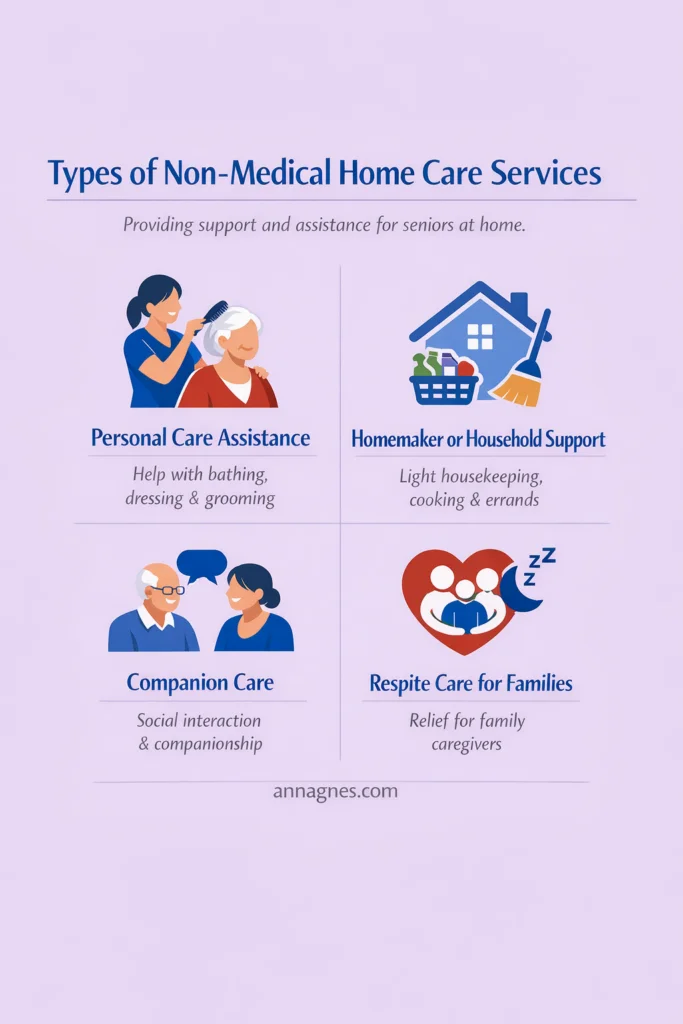
- Personal care. Bathing, dressing, grooming, toileting, and mobility assistance.
- Homemaking. Light housekeeping, meal preparation, errands, and laundry.
- Companionship. Emotional support, conversation, and help staying socially engaged.
- Respite care. Temporary relief for family caregivers who need time to rest or attend to other responsibilities.
Unlike medical home health care (which involves nurses or therapists), non‑medical home care centers on improving quality of life, preserving independence, and reducing stress for both clients and families.
Why This Conversation Matters
The shift toward non‑medical home care isn’t just a trend — it’s a reflection of how people want to live. Most seniors and individuals with disabilities prefer staying in their own homes, surrounded by familiarity and personal memories. Institutional settings often feel rigid or impersonal by comparison.
At the same time, insurance programs — including Medicaid waiver programs and some private plans — increasingly recognize that compassionate in‑home support can prevent hospitalizations and delay costly facility placements. In other words, effective home care services save not only money, but dignity.
When Families Know It’s Time to Get Help

Few families plan for home care early. Usually, they notice gradual changes that turn into daily concerns:
- Meals skipped or spoiled because cooking feels too tiring.
- Missed medications or neglected hygiene.
- Hazardous clutter or frequent minor falls.
- Withdrawal from friends, church, or family gatherings.
- Burnout among primary caregivers who are stretched thin.
Recognizing these signs early allows smoother transitions. What most people don’t realize is that arranging care proactively — even a few hours a week — prevents crises later on and helps loved ones adjust more comfortably.
Types of Non‑Medical Home Care Services
In practice, home care services are highly flexible. The right combination depends on each person’s unique lifestyle, preferences, and level of independence.
1. Personal Care Assistance
For those needing help with bathing, dressing, or grooming. Small routines like brushing hair or choosing clothes may seem minor, but they directly reinforce confidence and emotional well‑being.
2. Homemaker or Household Support
Caregivers handle light chores, meal prep, grocery shopping, and laundry. It’s the daily structure that keeps a home safe and welcoming.
3. Companion Care
Social isolation is one of the quietest threats to health. Companionship visits offer conversation, games, reading aloud, or even walks — simple gestures that fight loneliness and memory decline.
4. Respite Care for Families
No one can pour from an empty cup. Temporary caregiver relief helps relatives recharge, knowing their loved one is still receiving dependable attention.
Each service is designed to fill in gaps — not replace family, but support them.
Benefits of Non-Medical Home Care Services
Beyond meeting basic needs, non-medical home care services deliver meaningful improvements in daily life. Families often see enhanced independence, reduced stress, and stronger emotional connections. For more on these advantages, see Benefits of Homecare.
Key benefits include:
- Preserved independence. Assistance with tasks allows clients to focus on what they enjoy most.
- Family relief. Respite reduces caregiver burnout and restores family relationships.
- Better quality of life. Companionship combats isolation while homemaking keeps homes functional and safe.
- Cost efficiency. Often more affordable than facilities, especially with insurance support.
Balancing Independence and Support
A respectful home care relationship walks a fine line: helping without taking over. Skilled caregivers understand this balance intuitively. They know when to lend a hand and when to step back, giving clients the satisfaction of doing tasks themselves whenever possible.
The best agencies train their staff to maintain this balance — encouraging clients to participate, choose activities, and stay engaged rather than passively receiving help. Over time, that approach sustains physical ability, emotional stability, and a sense of purpose.
How to Choose a Home Care Agency
This is where families often feel uncertain. Ads and websites can sound reassuring, but real quality often reveals itself through smaller details — how an agency listens, responds, and follows up.
Key factors to evaluate include:
- Reputation and credentials. Are caregivers screened, insured, and trained to meet professional standards?
- Compatibility. Does the agency take time to understand the client’s personality and preferences before assigning a caregiver?
- Consistency. Are visits punctual and dependable, with the same caregivers when possible?
- Supervision and communication. Does a coordinator regularly check in, update families, and adjust care plans when needs change?
- Transparency. Are costs, schedules, and expectations explained clearly before service begins?
Learn more with our detailed guide: How to Choose a Home Care Agency That Delivers Quality and Compassion.
Essential Questions to Ask Home Care Providers

Narrowing options requires asking the right questions — the ones that reveal true quality and fit. Too many families skip this, assuming general conversations suffice. Here’s where things often go wrong: without targeted questions, subtle red flags get missed.
Prioritize these:
- About caregivers: “What training do they receive, and how do you ensure consistency?”
- About operations: “What’s your policy for emergencies, cancellations, or supervisor visits?”
- About costs: “Are there hidden fees, and how do you handle schedule changes?”
- About oversight: “How do you monitor care quality and handle feedback?”
- About matching: “How do you pair caregivers with clients based on personality and needs?”
For a complete list, check The Most Important Questions to Ask Home Care Providers to Ensure Quality Care.
These questions separate reliable partners from transactional providers — and build trust from day one.
Building a Thoughtful Care Plan
A written care plan turns general intentions into dependable routines. It outlines duties, timing, and priorities so everyone — family, caregiver, and client — stays aligned.
Components usually include:
- Assessment of needs and risks. What areas require daily support versus periodic help?
- Schedule and frequency. Hours per visit, preferred days, and flexibility for changes.
- Task details. Specific chores, meal preferences, or mobility instructions.
- Communication plan. How progress or concerns are shared.
- Emergency contact procedures. Who to notify in urgent situations.
Families should view care plans as living documents. Life evolves — health, moods, and family routines shift — and the best agencies revisit plans regularly to keep care relevant and respectful.
Common Misconceptions About Home Care
Several persistent myths keep families from seeking help early enough. Let’s address a few head‑on.
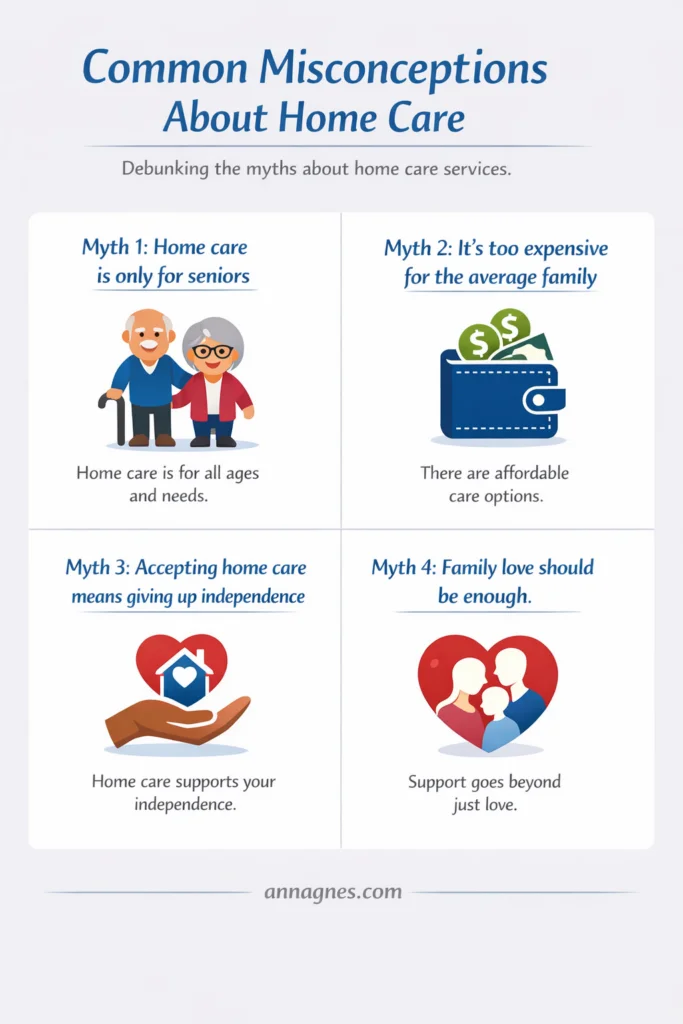
Myth 1: Home care is only for seniors.
Truth: Non‑medical home care also supports adults with disabilities, individuals recovering from accidents, or anyone needing extra help at home.
Myth 2: It’s too expensive for the average family.
Truth: Many clients qualify for Medicaid waiver programs or private insurance reimbursements, making professional support more accessible than most assume.
Myth 3: Accepting home care means giving up independence.
Truth: The goal is the exact opposite. Effective home care lets clients continue living independently, safely, and with confidence — right where they feel most comfortable.
Myth 4: Family love should be enough.
Truth: Love matters, but professional structure prevents burnout and ensures consistent safety. Using home care isn’t a failure; it’s a responsible act of partnership.
Understanding these distinctions removes guilt and hesitation, allowing families to choose help that genuinely improves everyone’s quality of life.
Cost and Coverage Considerations
Discussing cost early prevents frustration later. Rates vary by region, schedule, and complexity, but transparency is key.
Families should clarify:
- Hourly versus live‑in rates. Some clients need only a few hours weekly; others benefit from full‑day coverage.
- Administrative or assessment fees. Reputable agencies outline these before the first visit.
- Insurance coordination. Ask if the provider assists with Medicaid waiver claims or private policy billing to streamline reimbursement.
- Plan flexibility. The ability to adjust hours helps manage both finances and changing needs.
A well‑run agency helps families view care as an investment in stability, not an unpredictable expense.
Maintaining Quality and Trust at Home
Because home care happens in private, continuous quality oversight is essential. Good agencies don’t just hire caregivers — they supervise them.
Look for processes such as:
- Background and reference checks before assignment.
- Ongoing training and evaluations.
- Scheduled supervision visits or calls to ensure consistency.
- Feedback channels so families can voice concerns quickly.
What often goes unnoticed is how small professional touches — punctuality, respect for privacy, attention to personal habits — create emotional safety. Families who communicate openly with their caregivers tend to build lasting, trusting relationships that clients look forward to.
Emotional Dynamics: Supporting Both Client and Family
Caregiving dynamics are deeply personal. When an outside caregiver enters the picture, families sometimes fear being replaced. In practice, the healthiest arrangement works like teamwork — the caregiver handles structured tasks, while family members focus on emotional connection.
It’s common for families to discover unexpected benefits: renewed patience, reduced stress, and more quality time together because daily chores and safety monitoring are handled professionally.
Respite care also restores balance. A few hours of reliable coverage can prevent exhaustion and allow caregivers to return refreshed — a simple but powerful form of self‑care.
Where Families Often Struggle

Even with good intentions, common missteps occur:
- Waiting until a crisis hits. Starting too late often limits choices and strains everyone.
- Overestimating independence. Loved ones may downplay struggles to avoid burdening family members.
- Ignoring personality fit. Compatibility between caregiver and client affects success more than most realize.
- Lack of follow‑up. Assuming care will “run itself†leads to communication gaps.
The lesson? Treat home care as a collaborative relationship that needs ongoing attention — not just a service contract.
Beyond Basic Care: Enhancing Quality of Life
Once essential routines stabilize, families can focus on enrichment. Small additions often have outsized effects:
- Hobby encouragement: art projects, gardening, gentle exercise.
- Community connections: attending local events or social clubs.
- Technology: virtual calls with relatives, music playlists, or memory games.
- Health habits: balanced meals, hydration, and consistent rest schedules.
Home care opens breathing room for these details — the kind that make each day worth looking forward to.
Key Takeaways and Next Steps
Understanding home care services begins with an honest look at what families can and can’t manage alone. Reliable non‑medical home care doesn’t replace love; it strengthens it by adding stability, safety, and compassionate partnership.
If a family is evaluating next steps:
- Observe daily routines. Identify tasks becoming unsafe or overwhelming.
- Start small. Arrange a part‑time schedule to test comfort and compatibility.
- Ask questions about coverage. Check Medicaid waiver or insurance eligibility.
- Communicate openly with providers. Make sure all parties share expectations.
- Review every few months. Adjust plans as needs and comfort levels change.
The goal isn’t perfection — it’s peace of mind.
Families seeking thoughtful, customizable support can turn to Ann & Agnes Homecare Agency, which provides a full range of non‑medical home care services recognized by Medicaid waiver programs and private insurance plans. Their team’s mission is simple: to help individuals retain dignity, independence, and comfort at home — where life feels most familiar and fulfilling.