
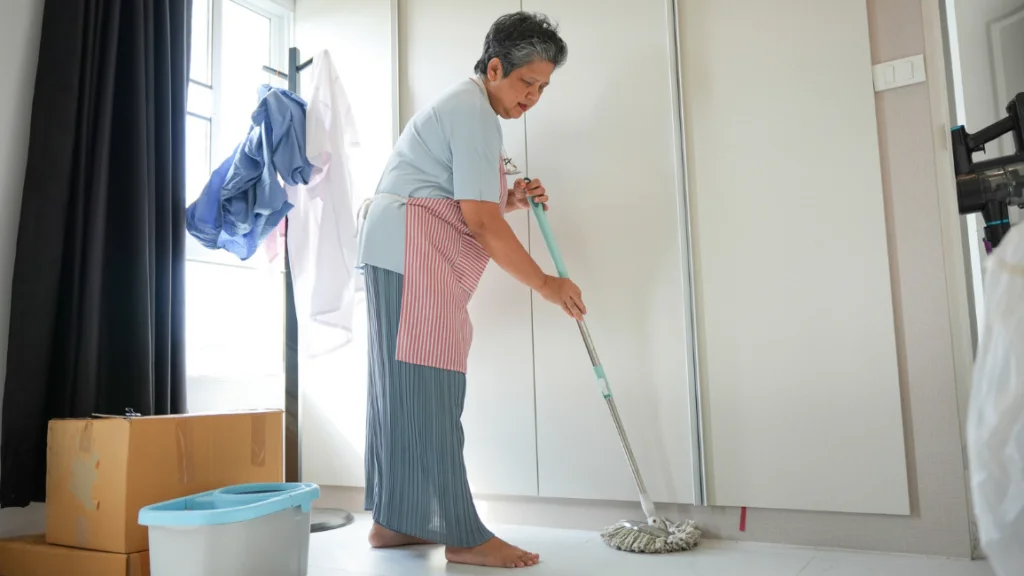
As people age, small changes in routine often appear long before families realize extra support may be needed. A missed medication, an unwashed pile of laundry, unopened mail, or difficulty getting dressed can seem minor at first. However, these everyday struggles may point to challenges with activities of daily living, which are the basic tasks individuals perform to care for themselves safely and independently. Recognizing these early warning signs matters because timely support can help seniors maintain dignity, reduce risks, and continue living comfortably in familiar surroundings for as long as possible.
What Are Activities of Daily Living?
Activities of daily living refer to the essential self-care tasks people perform every day to maintain health, hygiene, and independence. Healthcare providers, caregivers, and family members often use these tasks as a way to evaluate whether an older adult may need additional assistance.
These daily tasks are commonly divided into two categories:
Basic Activities of Daily Living (ADLs)
These are the core personal care tasks necessary for daily functioning, including:
- Bathing and personal hygiene
- Dressing
- Eating
- Toileting
- Walking or transferring safely
- Maintaining continence
When seniors begin struggling with these tasks, it can affect both their physical safety and emotional well-being.
Instrumental Activities of Daily Living (IADLs)
These tasks are slightly more complex but still essential for independent living. They include:
- Cooking meals
- Grocery shopping
- Housekeeping
- Managing medications
- Handling finances
- Transportation
- Using communication devices
- Scheduling appointments
Difficulty with instrumental activities of daily living often appears earlier than struggles with basic personal care.
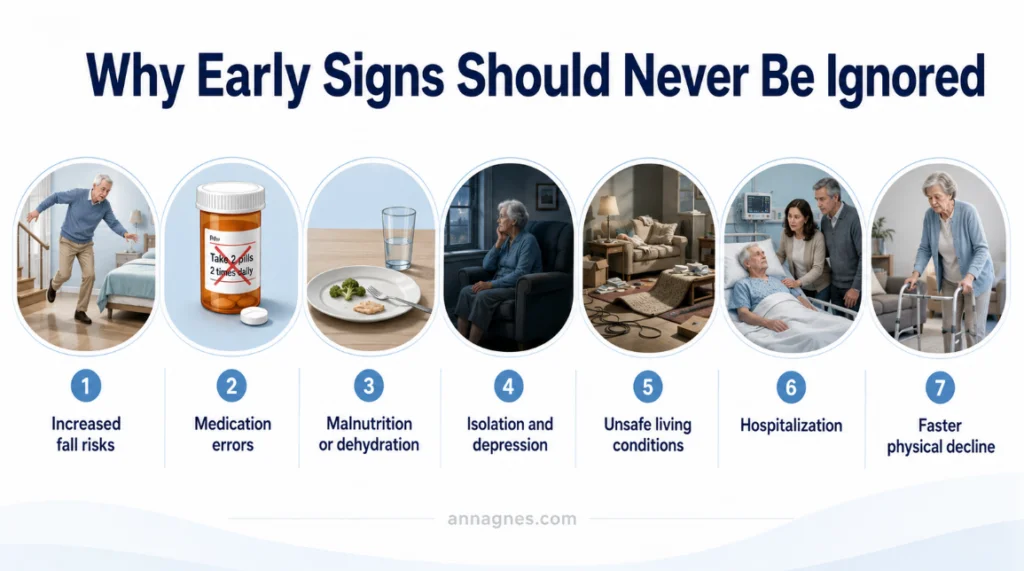
Why Early Signs Should Never Be Ignored
Families sometimes assume occasional forgetfulness or physical fatigue is simply part of aging. While some changes are natural, consistent struggles with daily tasks may indicate a growing need for support.
Ignoring these signs can lead to:
- Increased fall risks
- Medication errors
- Malnutrition or dehydration
- Isolation and depression
- Unsafe living conditions
- Hospitalization
- Faster physical decline
Early intervention does not mean taking away independence. In many cases, the right level of support actually helps seniors stay independent longer.
The First Physical Signs Seniors May Need Extra Help
Physical changes are often among the earliest indicators that assistance may be necessary. These changes can develop slowly, making them easy to overlook at first.
1. Trouble Moving Around Safely
Mobility issues can make routine tasks difficult and dangerous. Watch for signs such as:
- Holding onto furniture while walking
- Difficulty standing up from chairs
- Unsteady balance
- Slower walking speed
- Hesitation when using stairs
- Frequent bruises from bumps or falls
Reduced mobility affects many activities of daily living because even simple movements require strength, coordination, and balance.
2. Poor Personal Hygiene
A noticeable decline in grooming habits may indicate physical limitations, memory concerns, or exhaustion.
Signs may include:
- Wearing the same clothes repeatedly
- Body odor
- Unbrushed hair
- Long or dirty fingernails
- Difficulty bathing regularly
- Avoiding showers due to fear of falling
Many seniors feel embarrassed discussing these challenges, so family members should approach the topic with compassion rather than criticism.
3. Weight Loss or Poor Nutrition
Nutrition problems are another major warning sign. Seniors may struggle with meal preparation due to fatigue, mobility limitations, or cognitive decline.
Watch for:
- Expired food in the refrigerator
- Empty cupboards
- Noticeable weight loss
- Loss of appetite
- Dehydration
- Reliance on processed or unhealthy meals
Even mild nutritional deficiencies can weaken the body and increase health complications over time.
Cognitive Changes That Affect Daily Functioning
Cognitive decline does not always appear dramatically. In many cases, it first affects organization, memory, and routine management.
1. Forgetting Important Tasks
Occasional forgetfulness is common, but repeated memory issues may interfere with safety and independence.
Examples include:
- Missing medications
- Forgetting appointments
- Leaving the stove on
- Losing bills or important paperwork
- Repeating questions frequently
- Forgetting recent conversations
These changes can directly impact both basic and instrumental activities of daily living.
2. Difficulty Following Daily Routines
Seniors who once managed their schedules well may suddenly appear overwhelmed by simple tasks.
You might notice:
- Confusion while cooking familiar meals
- Trouble managing household chores
- Difficulty following directions
- Problems organizing daily responsibilities
- Incomplete tasks left around the home
These signs may indicate the need for additional supervision or assistance.
Emotional and Behavioral Signs Families Often Miss
Not all warning signs are physical. Emotional and behavioral changes can also suggest that a senior is struggling behind the scenes.
1. Increased Isolation
Older adults sometimes withdraw socially when daily tasks become difficult or embarrassing.
This may look like:
- Avoiding phone calls
- Declining invitations
- Staying home more often
- Losing interest in hobbies
- Reduced communication with family
Isolation can increase feelings of loneliness, anxiety, and depression, especially when seniors feel they are losing independence.
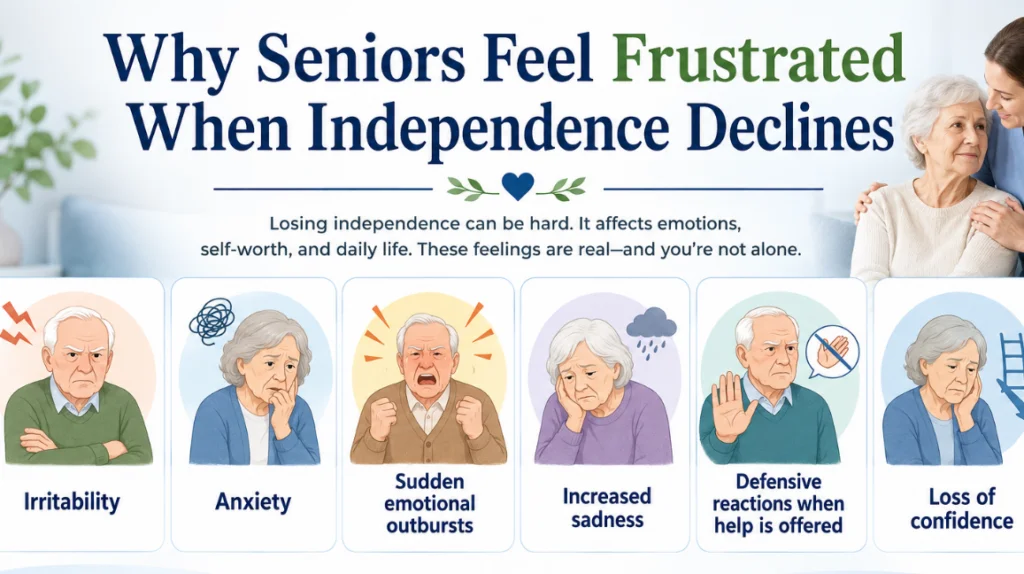
2. Mood Changes or Irritability
Frustration often accompanies declining abilities. Seniors who once handled everything independently may feel upset about needing help.
Possible signs include:
- Irritability
- Anxiety
- Sudden emotional outbursts
- Increased sadness
- Defensive reactions when help is offered
- Loss of confidence
These emotional responses are understandable and should be met with patience and empathy.
Signs Inside the Home That Should Raise Concern
A senior’s living environment can reveal a great deal about how well they are managing daily life.
1. Changes in Household Cleanliness
A messy or unsafe home may indicate physical limitations, exhaustion, or memory issues.
Watch for:
- Unwashed dishes
- Piles of laundry
- Trash accumulation
- Spoiled food
- Cluttered walkways
- Unpaid bills scattered around
Difficulty maintaining the home often points to struggles with instrumental activities of daily living.
2. Safety Hazards Around the House
Certain signs may suggest that living alone is becoming risky.
Examples include:
- Burn marks in the kitchen
- Forgotten appliances left on
- Multiple extension cords
- Poor lighting
- Loose rugs
- Missed medication containers
Small hazards can quickly become serious dangers if not addressed early.
How Chronic Health Conditions Affect Daily Independence
Many seniors manage one or more chronic health conditions that gradually impact daily functioning.
Conditions commonly linked to reduced independence include:
- Arthritis
- Diabetes
- Stroke recovery
- Parkinson’s disease
- Heart disease
- Osteoporosis
- Dementia
- Vision impairment
These conditions may affect strength, coordination, memory, or energy levels, making activities of daily living harder over time.
For example:
- Arthritis may make dressing painful
- Vision problems can increase fall risks
- Diabetes complications may affect mobility
- Cognitive disorders can interfere with medication management
Support strategies should always consider the individual’s overall health and abilities.
Why Seniors Sometimes Hide Their Struggles
Many older adults fear losing control over their lives. Because of this, they may minimize their challenges or refuse help entirely.
Common reasons seniors hide difficulties include:
- Fear of losing independence
- Embarrassment
- Pride
- Worry about becoming a burden
- Concern about moving out of their home
- Fear of judgment
Families should avoid forcing conversations or making sudden decisions. A respectful, collaborative approach is usually far more effective.
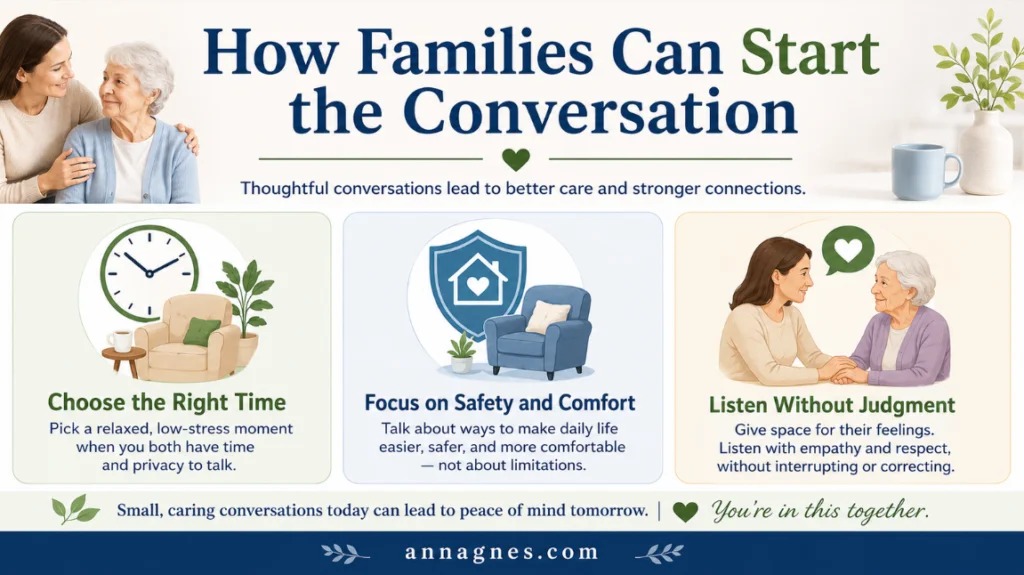
How Families Can Start the Conversation
Discussing support needs with aging loved ones can feel emotional and uncomfortable. However, waiting too long often creates more stress later.
1. Choose the Right Time
Avoid starting the conversation during a crisis or argument. Instead:
- Pick a calm moment
- Speak privately
- Minimize distractions
- Allow enough time for discussion
2. Focus on Safety and Comfort
Rather than emphasizing limitations, focus on improving quality of life.
Helpful conversation starters may include:
- “I’ve noticed some daily tasks seem more tiring lately.â€
- “How are you feeling about managing everything at home?â€
- “Would extra support make things easier for you?â€
3. Listen Without Judgment
Seniors deserve to feel heard and respected. Allow them to express concerns, fears, and preferences openly.
A collaborative discussion often leads to better outcomes than a one-sided lecture.
Why Homecare Can Be a Helpful Option for Seniors Needing Additional Support
Many families assume the only option is moving a loved one into a facility, but that is not always necessary. Homecare services can provide practical support while allowing seniors to remain in familiar surroundings.
For older adults struggling with activities of daily living, homecare may help with:
- Personal hygiene assistance
- Meal preparation
- Medication reminders
- Housekeeping tasks
- Mobility support
- Companionship
- Transportation assistance
- Daily supervision
This type of support can reduce stress for both seniors and family caregivers while helping maintain routines and independence.
Benefits of Receiving Support at Home
Home-based assistance offers several important advantages:
- Familiar surroundings may reduce anxiety
- One-on-one attention provides personalized support
- Families can remain actively involved
- Seniors often feel more comfortable at home
- Daily routines are easier to maintain
- Support can be adjusted as needs change
For many individuals, receiving help at home feels less overwhelming than transitioning into a new living environment.
When It May Be Time to Seek Professional Guidance
Sometimes families struggle to determine whether occasional help is enough or if more structured support is necessary.
You may want to seek professional guidance if:
- Falls are becoming more frequent
- Medications are consistently missed
- Personal hygiene has significantly declined
- Memory problems are worsening
- Nutrition and hydration are poor
- The home environment feels unsafe
- Family caregivers are overwhelmed
Early planning allows families to explore options calmly instead of making rushed decisions during emergencies.
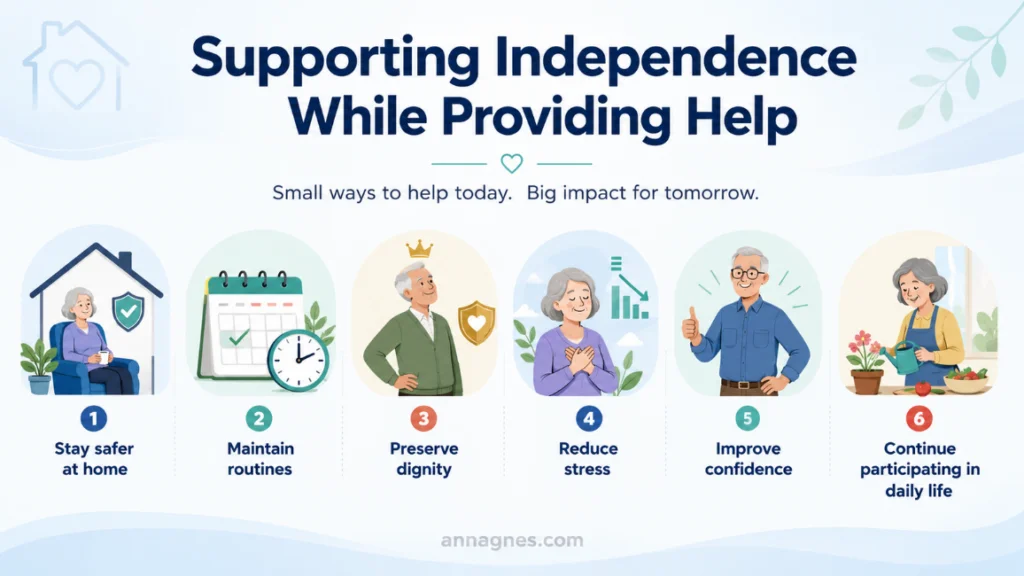
Supporting Independence While Providing Help
One of the biggest misconceptions about caregiving is that accepting help means losing independence. In reality, the opposite is often true.
Appropriate support can help seniors:
- Stay safer at home
- Maintain routines
- Preserve dignity
- Reduce stress
- Improve confidence
- Continue participating in daily life
The goal is not to take over tasks unnecessarily but to provide the right level of assistance where needed.
Encouraging seniors to participate in decisions about their care also helps maintain autonomy and self-respect.
Don’t Wait for a Crisis to Recognize the Signs
The earliest struggles with activities of daily living are often subtle, but they matter more than many families realize. Paying attention to physical changes, cognitive shifts, emotional withdrawal, and household safety concerns can help loved ones receive support before problems escalate. Whether assistance involves occasional help with meals, supervision, housekeeping, or personal care, taking action early can improve quality of life and reduce unnecessary risks. If someone you love is beginning to struggle with daily routines, exploring compassionate homecare support through ANN&AGNES Homecare Agency may help them remain safe, comfortable, and supported while continuing to live in the place they know best.